Translation has shaped civilizations for millennia, bridging cultures and preserving knowledge through dedicated schools of linguistic mastery across the ancient world.

🏛️ The Dawn of Organized Translation: Where It All Began
Long before modern language institutes and digital translation tools, the ancient world recognized the critical importance of linguistic mediation. Translation schools emerged as centers of intellectual excellence, where scholars dedicated their lives to the painstaking work of transferring knowledge across linguistic boundaries. These institutions were not merely educational facilities—they were cultural powerhouses that determined which ideas would survive, which texts would be preserved, and how civilizations would communicate with one another.
The need for systematic translation arose naturally from the expansion of empires, the growth of international trade, and the universal human desire to understand foreign wisdom. Ancient rulers quickly realized that controlling information flow meant controlling power itself. This realization led to the establishment of formal translation centers, where teams of linguists worked collaboratively to decode foreign texts and make them accessible to their own cultures.
📚 The House of Wisdom: Baghdad’s Legendary Translation Movement
Perhaps no translation institution has captured the imagination quite like the House of Wisdom in Baghdad. Established during the Islamic Golden Age under Caliph Harun al-Rashid and expanded significantly by his son Al-Ma’mun in the 9th century, this institution represented the pinnacle of translation scholarship in antiquity.
The House of Wisdom employed dozens of translators who worked primarily from Greek, Persian, and Sanskrit into Arabic. These scholars didn’t merely translate words—they transferred entire systems of knowledge. Mathematical treatises from India, philosophical works from Greece, and astronomical observations from Persia all flowed through the skilled hands of Baghdad’s translation masters.
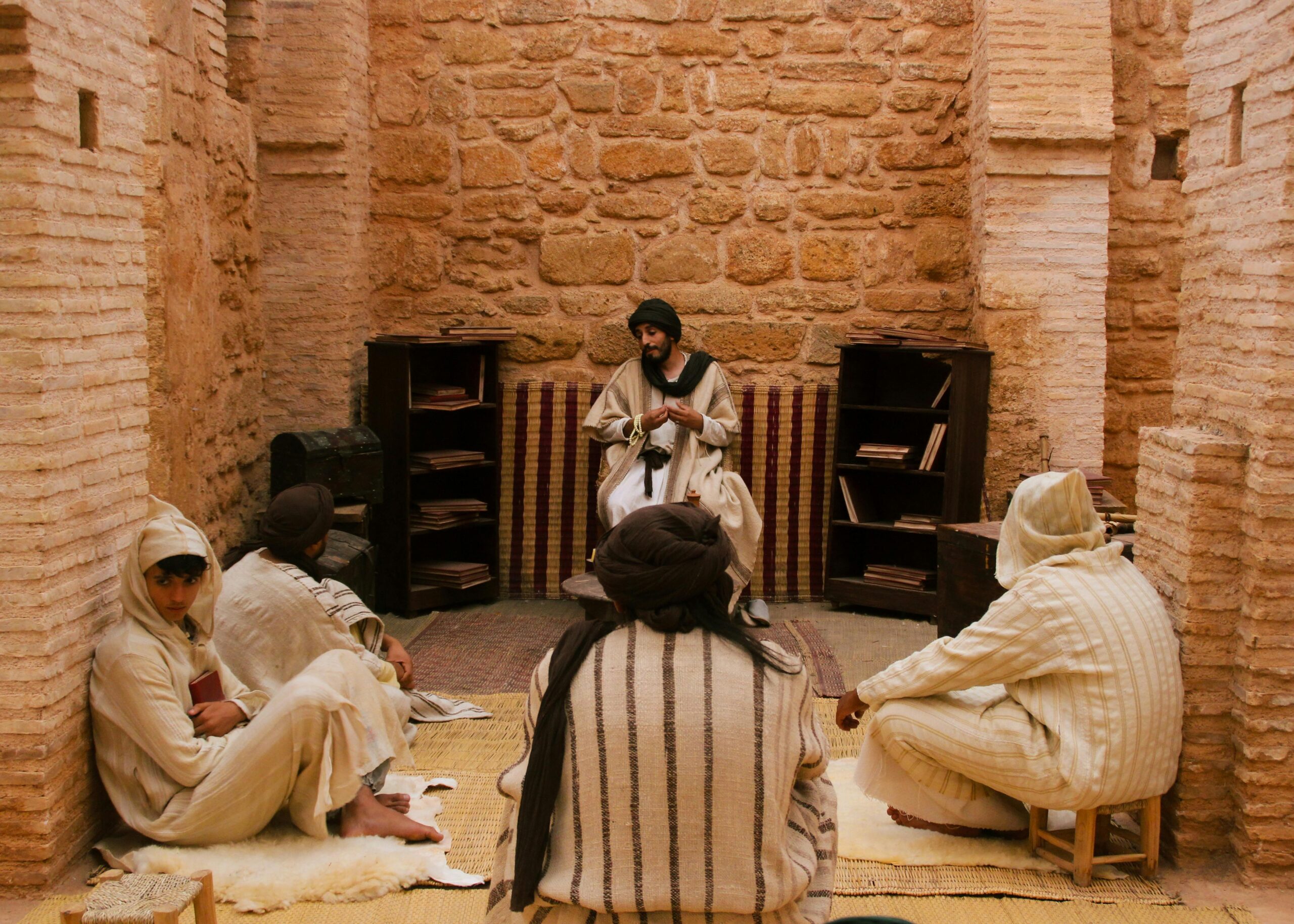
The methodology employed at the House of Wisdom was remarkably sophisticated. Translators worked in teams, often with one scholar reading the source text aloud while others debated the most accurate rendering in Arabic. This collaborative approach ensured accuracy and allowed for philosophical discussions about meaning, context, and cultural adaptation. The institution’s impact on world knowledge cannot be overstated—much of what we know about ancient Greek philosophy today survived only because these Arab translators preserved it.
Key Translators Who Changed History
Hunayn ibn Ishaq stands out as perhaps the most prolific translator of the House of Wisdom. This Nestorian Christian scholar mastered Greek, Syriac, Arabic, and Persian, translating over one hundred works including the complete corpus of Galen’s medical texts. His translation methodology was so advanced that he wrote a treatise on translation theory, making him one of history’s first translation theorists.
The Banu Musa brothers—Muhammad, Ahmad, and al-Hasan—sponsored numerous translation projects and contributed their own mathematical works. Their patronage model became a template for how wealthy intellectuals could advance knowledge through translation support.
🌍 The School of Translators in Toledo: Europe’s Gateway to Knowledge
As Islamic civilization flourished in the Middle East, another extraordinary translation movement emerged in medieval Spain. The School of Translators in Toledo, established in the 12th century after the Christian reconquest of the city, became the primary conduit through which Arabic and Greek knowledge entered Western Europe.
Toledo’s unique position as a former Islamic city with substantial Arabic-speaking populations made it ideal for translation work. The school operated under a distinctive model where Christian, Muslim, and Jewish scholars worked side by side—a remarkable example of interfaith intellectual cooperation during an era often characterized by religious conflict.
The translation process in Toledo typically involved two stages. A scholar fluent in Arabic would translate texts into Castilian Spanish, and then a Latin scholar would render the Castilian version into Latin, the lingua franca of European scholarship. This double-translation method, while potentially introducing errors, allowed specialists in each language to contribute their expertise.
Transformative Texts That Shaped European Thought
Gerard of Cremona, who spent his entire adult life in Toledo, translated over seventy works from Arabic to Latin, including Ptolemy’s Almagest, Avicenna’s Canon of Medicine, and crucial works of Aristotle with Arabic commentaries. These translations fundamentally transformed European medicine, astronomy, mathematics, and philosophy.
The impact of Toledo’s translation school on the European Renaissance cannot be exaggerated. By making Arabic scientific and philosophical works available in Latin, these translators essentially jumpstarted European intellectual development and laid the groundwork for the Scientific Revolution centuries later.
🏺 Alexandria’s Museum: The Ancient World’s First Translation Hub
Long before Baghdad or Toledo, the ancient city of Alexandria in Ptolemaic Egypt established what might be considered history’s first systematic translation institution. The famous Library of Alexandria and its associated Museum served not only as repositories of knowledge but as active centers of textual translation and interpretation.
The Ptolemaic rulers, Greek-speaking monarchs governing an Egyptian population, immediately recognized the need for linguistic mediation. They commissioned translations of Egyptian texts into Greek and imported works from across the known world to be translated and added to the library’s collection. The Septuagint—the Greek translation of Hebrew scriptures—was produced in Alexandria, representing one of antiquity’s most influential translation projects.
Scholars at Alexandria’s Museum developed sophisticated textual criticism methods, comparing different manuscript versions and attempting to establish authoritative texts. This philological work laid foundations for modern translation and interpretation practices. The institution’s emphasis on accuracy and preservation of meaning established standards that translation schools would follow for centuries.
⚡ Translation Methodologies: Ancient Techniques That Still Resonate
Ancient translation schools developed sophisticated methodological approaches that continue to influence modern translation theory. The debate between literal translation and sense-for-sense translation—whether to prioritize word-for-word accuracy or overall meaning—was already alive in antiquity.
Cicero, the Roman orator and statesman, articulated a clear philosophy of translation in his work. He argued against slavish literal translation, advocating instead for capturing the spirit and style of the original while adapting it for Roman audiences. This approach, which we might today call “dynamic equivalence,” recognized that effective translation requires cultural as well as linguistic competence.
St. Jerome, translating the Bible into Latin in the 4th century, grappled with similar questions. His Vulgate translation became the standard Bible for Western Christianity for over a millennium. Jerome’s detailed letters discussing translation challenges provide invaluable insights into ancient translation theory. He distinguished between sacred texts, where literal accuracy was paramount, and secular works, where stylistic elegance could take precedence.
Training the Ancient Translator
Becoming a translator in antiquity required years of intensive study. Students needed mastery of multiple languages, deep cultural knowledge, and often expertise in specific subject areas like medicine, astronomy, or philosophy. Training typically began in childhood, with students memorizing vast amounts of text in both source and target languages.
Advanced training involved studying under master translators, examining previous translations critically, and producing trial translations for review. The collaborative nature of many ancient translation projects meant that apprentice translators learned through participation in actual projects, gradually taking on more responsibility as their skills developed.
💎 Specialized Translation Schools: Medicine, Science, and Law
Beyond general translation institutions, antiquity saw the development of specialized translation schools focusing on particular disciplines. Medical translation schools emerged in cities like Gundeshapur in Persia, where scholars translated medical texts from Greek and Sanskrit into Persian and later Arabic.
The Gundeshapur academy, established in the 3rd century, predated the House of Wisdom and served as a model for later translation institutions. Its emphasis on medical translation ensured the preservation and transmission of Hippocratic and Galenic medicine to the Islamic world and eventually back to Europe.
Legal translation represented another specialized area. As empires expanded, the need to translate laws, treaties, and diplomatic correspondence became critical. Roman administrators employed professional translators throughout their territories, developing standardized terminology and translation practices for legal texts.
🌟 The Cultural Impact: How Translation Schools Shaped Civilizations
Translation schools did far more than simply convert words from one language to another—they fundamentally shaped the development of civilizations. By determining which texts were worth translating, these institutions exercised enormous influence over intellectual priorities and cultural values.
The preservation of Greek philosophy through Arabic translation is perhaps the most striking example. When Christian Europe largely lost interest in pagan Greek philosophy during the early Middle Ages, Arab translators preserved these works. Centuries later, European translators working from Arabic texts reintroduced Aristotle and other Greek philosophers to the West, sparking theological and philosophical revolutions.
Translation schools also facilitated technological transfer. Arabic translations of Indian mathematical texts introduced the revolutionary concept of zero to the Islamic world, and later translations brought this innovation to Europe, transforming mathematics and making modern science possible. Engineering treatises, agricultural manuals, and craft techniques all traveled along translation pathways, improving material life across civilizations.
Religious Transformation Through Translation
Religious traditions were profoundly shaped by translation institutions. Buddhism spread across Asia partly through the work of dedicated translation schools that rendered Sanskrit texts into Chinese, Tibetan, and other languages. These weren’t mechanical translations but careful adaptations that made Buddhist concepts comprehensible within different cultural frameworks.
The translation of Christian scriptures into various languages—from the Septuagint’s Greek to Jerome’s Latin to countless vernacular versions—fundamentally shaped how different communities understood and practiced Christianity. Translation choices about key theological terms had enormous consequences for doctrine and practice.
🎯 Challenges Ancient Translators Faced
Ancient translators confronted formidable obstacles that modern professionals can scarcely imagine. Working without dictionaries, with limited reference materials, and often dealing with unique manuscript copies that might contain errors, ancient translators had to be part detective, part scholar, and part creative writer.
Technical terminology posed enormous challenges. How do you translate a Greek medical term when no equivalent exists in Arabic? Ancient translators often coined new words, borrowed terms directly, or created extended explanations. These creative solutions enriched target languages and expanded their expressive capabilities.
Cultural concepts that existed in one society but not another created translation dilemmas. Legal terms, religious ideas, and social institutions often lacked direct equivalents. Translators had to decide whether to explain, approximate, or transliterate—choices that shaped how receiving cultures understood foreign societies.
📖 Legacy and Lessons: What Modern Translators Can Learn
The translation schools of antiquity offer valuable lessons for contemporary translation practice. Their emphasis on collaborative work, where multiple scholars reviewed and discussed translation choices, ensured higher quality than individual translators working in isolation could achieve. Modern translation projects might benefit from reviving this collaborative model.
The ancient recognition that translators needed deep cultural knowledge, not just linguistic competence, remains vital today. Effective translation requires understanding context, recognizing allusions, and grasping the cultural significance of terms—skills that go far beyond vocabulary and grammar.
Perhaps most importantly, ancient translation schools understood that their work had civilizational significance. They weren’t simply converting texts for immediate practical needs but preserving knowledge for future generations and building bridges between cultures. This sense of mission and responsibility elevated translation from a technical skill to a noble intellectual calling.
🔮 Rediscovering Lost Translation Centers
Archaeological and historical research continues to uncover evidence of additional translation institutions in the ancient world. Recent scholarship has highlighted translation activities in ancient China, where Buddhist texts were systematically translated from Sanskrit, and in Byzantium, where Greek scholars maintained and transmitted classical knowledge.
The Library of Nalanda in ancient India served as a major translation center where scholars rendered Buddhist texts into various languages. Thousands of monks studied there, many specifically training in translation techniques to spread Buddhist teachings across Asia.
Each newly discovered translation center adds complexity to our understanding of how knowledge circulated in antiquity. Rather than a simple linear progression from one civilization to another, we now recognize intricate networks of exchange, with multiple institutions simultaneously translating, adapting, and transmitting texts in various directions.
✨ Preserving the Spirit of Ancient Translation Excellence
The translation schools of antiquity remind us that linguistic mediation has always been central to human civilization. These institutions weren’t peripheral to ancient societies but stood at their very heart, enabling communication, preserving knowledge, and fostering cultural exchange.
Their dedication to accuracy, their collaborative methods, their recognition of translation’s cultural importance, and their commitment to preserving knowledge for future generations established standards that remain relevant today. As we navigate our own era of globalization and cross-cultural communication, the wisdom of ancient translation schools offers guidance and inspiration.
Modern technology has transformed translation in remarkable ways, but the fundamental challenges remain: conveying meaning across linguistic boundaries, respecting source cultures while making texts accessible to target audiences, and recognizing that translation is never merely mechanical but always involves interpretation and judgment. The ancient masters understood these truths deeply, and their legacy continues to illuminate the path for translators today.
By studying these remarkable institutions—from Alexandria’s Museum to Baghdad’s House of Wisdom to Toledo’s School of Translators—we gain not only historical knowledge but practical wisdom about the art and responsibility of translation. Their ancient secrets remain surprisingly relevant, offering timeless insights into one of humanity’s most essential and noble endeavors: building understanding across the boundaries of language and culture.