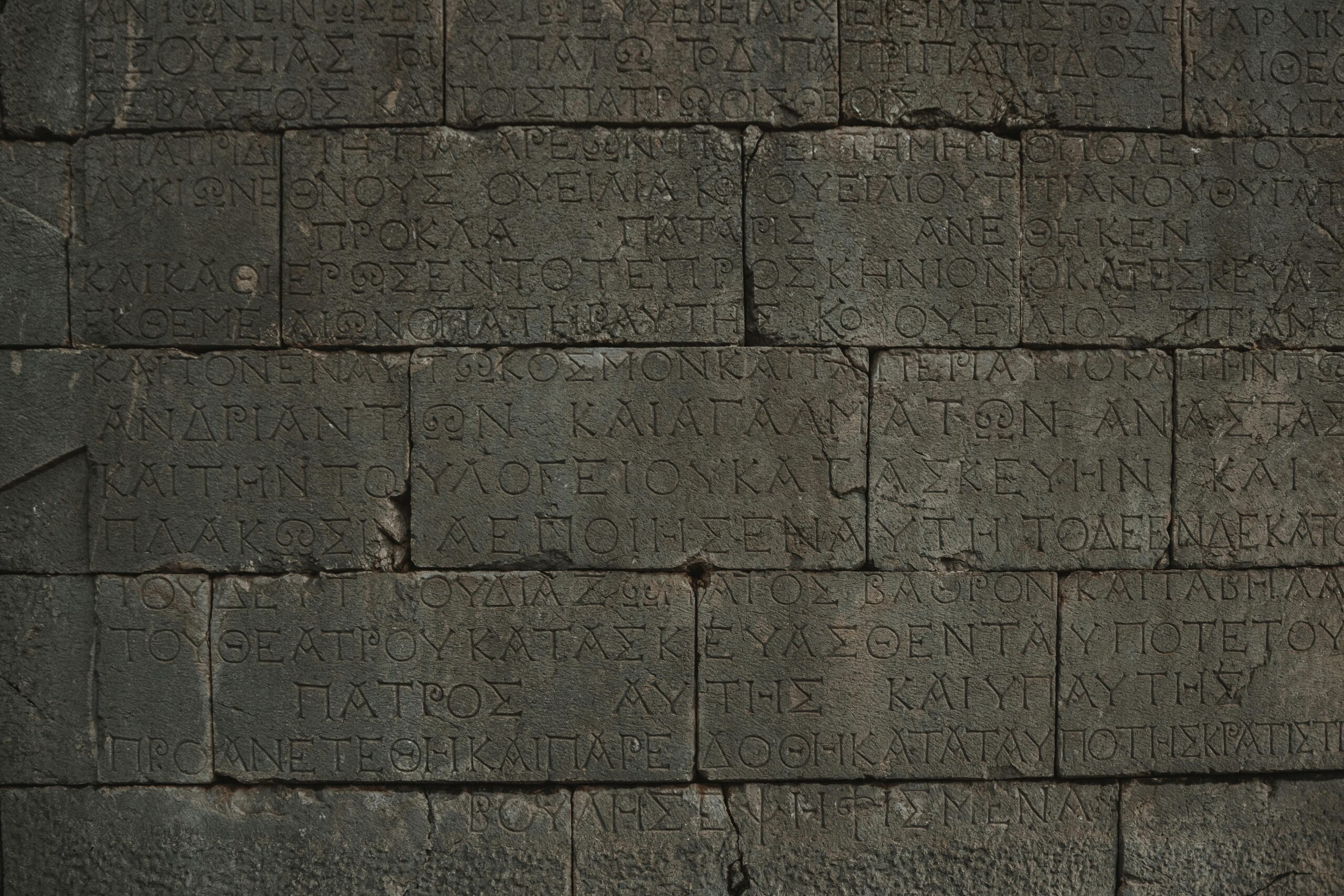
Ancient texts hold the keys to civilizations long past, preserving knowledge, culture, and wisdom that might otherwise be lost forever to the ravages of time.

The restoration of ancient manuscripts is far more than a technical exercise—it’s a bridge between worlds, connecting modern scholars and curious minds with the thoughts, beliefs, and daily lives of people who lived thousands of years ago. These fragile documents, whether inscribed on papyrus, parchment, clay tablets, or palm leaves, represent humanity’s earliest attempts to record and transmit information across generations. Today, the art and science of restoring these precious artifacts combines traditional craftsmanship with cutting-edge technology, creating opportunities to unlock secrets that were previously thought lost forever.
📜 The Fragile Nature of Historical Documents
Ancient texts face countless threats throughout their existence. Environmental factors like humidity, temperature fluctuations, and exposure to light cause irreversible damage over centuries. Biological threats including insects, mold, and bacteria actively consume the organic materials that comprise most historical documents. Human interference, whether through wars, vandalism, or simple neglect, has destroyed countless irreplaceable manuscripts throughout history.
The materials used in ancient writing vary dramatically across cultures and time periods. Egyptian papyrus, created from pressed plant fibers, was revolutionary for its time but remains highly susceptible to moisture damage. Medieval parchment, made from treated animal skins, proves more durable but contracts and warps with age. Clay tablets from Mesopotamia survive remarkably well when baked, yet fragments often scatter across archaeological sites, creating complex puzzles for restoration experts.
Understanding these vulnerabilities forms the foundation of restoration work. Every text requires a unique approach based on its composition, age, origin, and current condition. What works for a Dead Sea Scroll written on leather won’t necessarily apply to a Buddhist sutra inscribed on birch bark or an Aztec codex painted on fig-bark paper.
🔬 Traditional Restoration Techniques That Stand the Test of Time
Master restorers have refined their techniques over generations, developing methods that respect the integrity of original documents while stabilizing them for future study. These traditional approaches remain essential even in our digital age, providing the careful manual work that no machine can replicate.
The Delicate Art of Physical Repair
Physical restoration begins with comprehensive documentation. Conservators photograph texts from multiple angles under various lighting conditions, creating detailed records before any intervention occurs. This documentation proves invaluable if restoration choices need reconsideration or if the text deteriorates further despite best efforts.
Cleaning represents one of the most nerve-wracking stages. Accumulated dirt, previous repair attempts using inappropriate materials, and biological growth must be carefully removed without damaging original inks or substrates. Restorers employ everything from soft brushes and specialized erasers to controlled humidity chambers that allow gentle separation of stuck pages.
When texts have torn or fragmented, skilled conservators perform meticulous repairs using materials that closely match the original in composition and aging characteristics. Japanese tissue paper, prized for its strength and translucency, often serves as a backing material for reinforcing damaged areas. Wheat starch paste, used for centuries in Asia, provides an adhesive that remains reversible—a crucial quality allowing future conservators to undo repairs if better methods emerge.
Creating Protective Environments
Once stabilized, ancient texts require carefully controlled storage conditions. Temperature and humidity must remain constant within narrow ranges specific to each material type. Specialized enclosures protect documents from light exposure, pollutants, and physical handling. Many institutions create custom-fitted boxes lined with acid-free materials, ensuring each manuscript rests in an environment optimized for its preservation.
💻 How Digital Technology Revolutionizes Text Recovery
The digital revolution has transformed restoration work in ways previous generations of scholars could never have imagined. Advanced imaging technologies now reveal text that appears completely invisible to the naked eye, while computational tools assist in reconstructing fragmented documents with unprecedented accuracy.
Multispectral and Hyperspectral Imaging
These sophisticated imaging techniques capture documents under multiple wavelengths of light, from ultraviolet through visible spectrum to infrared. Inks that have faded to near invisibility often become readable again under specific wavelengths. This technology proved revolutionary in reading the Archimedes Palimpsest, a medieval manuscript where prayers were written over erased mathematical texts by the ancient Greek scholar. Multispectral imaging revealed the underlying mathematics without damaging the overlying text.
The process works because different materials absorb and reflect light differently depending on wavelength. An ink that appears identical to its background under normal light might show stark contrast under infrared illumination. By capturing images across dozens of wavelengths, researchers create datasets that can be digitally enhanced to maximize readability of damaged or faded text.
Artificial Intelligence and Machine Learning
AI algorithms now assist in some of the most challenging aspects of restoration work. Machine learning models trained on thousands of examples can predict missing characters in damaged texts with remarkable accuracy, offering multiple possibilities ranked by probability. These systems don’t make final decisions—human scholars retain that responsibility—but they accelerate research by highlighting likely interpretations.
Computer vision algorithms excel at the painstaking work of matching fragments. When archaeologists recover hundreds or thousands of text fragments from a site, determining which pieces belong together traditionally required years of manual sorting. AI systems can now analyze fragment shapes, text characteristics, and material properties to suggest matches, reducing years of work to months or even weeks.
Virtual Restoration and 3D Modeling
Three-dimensional scanning technology allows researchers to work with precise digital replicas of fragile texts without risking damage to originals. These models capture every crack, wrinkle, and surface irregularity, enabling virtual “unrolling” of scrolls too fragile to open physically. The Herculaneum papyri, carbonized by Mount Vesuvius’s eruption in 79 CE, have yielded their secrets through virtual unwrapping techniques that would have been impossible just decades ago.
🌍 Notable Success Stories in Text Restoration
The field of text restoration has produced remarkable victories, recovering knowledge that seemed permanently lost and rewriting our understanding of history.
The Dead Sea Scrolls Discovery
Discovered between 1947 and 1956 in caves near the Dead Sea, these ancient Jewish texts include the oldest known manuscripts of Hebrew Bible passages. Many scrolls arrived in fragments, darkened by age, and extremely fragile. Decades of careful restoration work combined with modern imaging technology have made approximately 90% of the scrolls readable, revolutionizing our understanding of Judaism and early Christianity.
Uncovering Hidden Texts in the Sinai
Saint Catherine’s Monastery in Egypt houses one of the world’s oldest continuously operating libraries. Recent multispectral imaging projects have revealed that many manuscripts are palimpsests—recycled parchments where original texts were scraped away and overwritten. These hidden texts include lost languages, unknown literary works, and valuable historical records that significantly expand our knowledge of medieval Mediterranean culture.
Reconstructing the Library of Ashurbanipal
This ancient Assyrian library, dating to the 7th century BCE, was destroyed when Nineveh fell in 612 BCE. Archaeologists recovered approximately 30,000 clay tablet fragments from the ruins. International teams continue piecing together these fragments, reconstructing works of literature, science, and administration. The Epic of Gilgamesh, one of humanity’s oldest literary masterpieces, was recovered from this collection through painstaking restoration work.
⚖️ Ethical Considerations in Restoration Practice
Text restoration involves complex ethical questions without simple answers. Every intervention, no matter how careful, alters an artifact in some way. Conservators must balance the desire to make texts readable and accessible against the imperative to preserve original materials and respect cultural ownership.
The Question of Reversibility
Modern conservation ethics emphasize reversibility—the principle that restoration work should be undoable if future experts develop better methods or disagree with earlier choices. This principle guides material selection and technique application, but it creates challenges. Some stabilization treatments that effectively preserve texts aren’t fully reversible, forcing difficult decisions about prioritizing long-term survival versus theoretical future reversibility.
Cultural Heritage and Repatriation
Many ancient texts reside in institutions far from their places of origin, acquired during colonial periods through means that wouldn’t meet modern ethical standards. The restoration community increasingly acknowledges that source communities should have input into how their cultural heritage is preserved and interpreted. Digital technology offers potential solutions, allowing high-quality digital repatriation even when physical return of fragile artifacts proves impractical.
Reconstruction Versus Speculation
When texts arrive damaged or fragmentary, how much reconstruction is appropriate? Conservators must clearly distinguish between original material and restored sections. Some institutions fill gaps with neutral-colored materials that support fragments without pretending to replicate original text. Others use digital methods to create hypothetical reconstructions that exist only virtually, leaving physical artifacts untouched beyond essential stabilization.
🎓 Training the Next Generation of Restoration Experts
The specialized skills required for ancient text restoration take years to develop, combining scientific knowledge, manual dexterity, historical understanding, and linguistic expertise. Universities and cultural institutions worldwide offer training programs that prepare conservators for this demanding work.
Students learn chemistry to understand material degradation and treatment options. They develop manual skills through supervised practice on less valuable documents before progressing to work with irreplaceable artifacts. Paleography—the study of historical writing systems—allows them to date texts and identify linguistic features even in damaged sections. Digital skills increasingly comprise essential elements of training, as technological tools become standard in the field.
Mentorship relationships remain crucial. Experienced conservators pass down techniques and judgment that textbooks cannot fully capture. Many institutions maintain apprenticeship-style programs where junior conservators work alongside masters for years, gradually taking on more responsibility as their skills develop.
🔮 Future Horizons in Ancient Text Restoration
The field continues evolving rapidly as new technologies emerge and our understanding of materials science advances. Several promising developments suggest that the coming decades will bring even more dramatic discoveries.
Quantum Imaging Techniques
Experimental quantum imaging systems might eventually reveal details invisible to current technologies. These systems exploit quantum mechanical properties of light to achieve resolution and sensitivity beyond classical imaging limits. Though still in early research stages, they could revolutionize work with heavily damaged texts.
Advanced Materials for Conservation
Nanotechnology researchers are developing new materials for conservation work. Nanoparticles can be engineered to neutralize acids, strengthen fibers, or provide protective coatings at molecular scales. These materials promise more effective preservation with less visible intervention than current methods allow.
Collaborative Digital Platforms
Online platforms increasingly connect researchers worldwide, allowing collaborative work on text restoration projects. Scholars can share high-resolution images, propose reconstructions, and debate interpretations in real time. Crowdsourcing initiatives even invite interested non-specialists to contribute to fragment matching and transcription projects, dramatically expanding the labor available for large collections.
🌟 Why Ancient Text Restoration Matters Today
In our digital age, one might question the relevance of preserving ancient documents. Yet these texts offer irreplaceable perspectives on human experience, cultural diversity, and historical development. They remind us that current knowledge represents just one point in humanity’s long intellectual journey.
Ancient texts frequently surprise us, challenging assumptions about past societies. They reveal that people thousands of years ago grappled with philosophical questions we still debate, developed sophisticated scientific understanding, and expressed universal human emotions through distinctive cultural lenses. Medical texts from ancient Egypt describe surgical techniques that remained standard until modern times. Mathematical papyri demonstrate problem-solving approaches that influenced later European mathematics. Literary works capture humor, tragedy, and insight that resonate across millennia.
Moreover, text restoration work drives technological innovation with applications far beyond archaeology. Imaging techniques developed for reading faded manuscripts assist forensic investigators and medical diagnosticians. Algorithms created for fragment matching find uses in fields from DNA sequencing to satellite imagery analysis. The interdisciplinary nature of restoration work fosters collaboration between humanists, scientists, and engineers, creating intellectual cross-pollination that benefits all involved fields.
🤝 Supporting Text Restoration Efforts
Cultural institutions worldwide need support to continue this vital work. Restoration projects require significant funding for specialized equipment, trained personnel, and climate-controlled storage facilities. Many organizations welcome public contributions, volunteer assistance, and advocacy for cultural heritage preservation.
Digital access initiatives allow anyone with internet connectivity to explore ancient texts from institutions globally. Major libraries and museums increasingly digitize collections, making high-resolution images freely available for research and education. Exploring these resources offers fascinating insights into history while supporting institutions’ missions to share knowledge broadly.
Educational outreach programs introduce students to ancient texts and conservation work, inspiring future generations of scholars and conservators. Supporting these programs through donations, volunteering, or simply attending public lectures helps ensure that expertise continues passing to new practitioners.
The art of restoring ancient texts represents one of humanity’s most fascinating endeavors—a meticulous, patient effort to recover voices from the distant past and ensure they continue speaking to future generations. As technology advances and our appreciation for cultural heritage deepens, we can anticipate even more remarkable discoveries emerging from documents that once seemed hopelessly damaged. Each restored text enriches our collective understanding of where we’ve been and offers perspective on where we might go. In unlocking secrets of the past, we illuminate possibilities for the future, maintaining an unbroken conversation across the millennia that defines our species’ unique capacity for accumulated knowledge and cultural continuity.