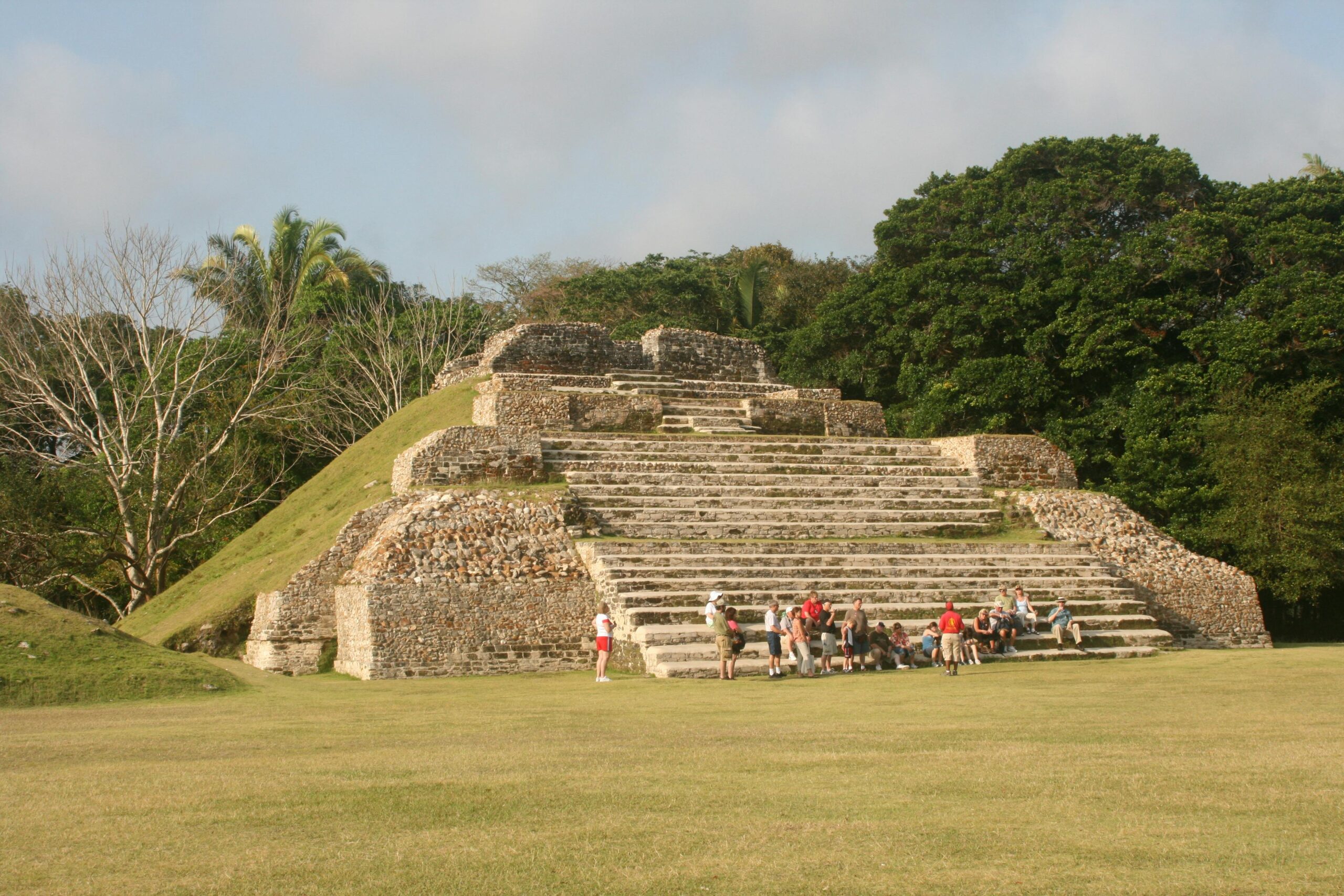
The Royal Archives of Mesopotamia stand as one of humanity’s most precious windows into ancient civilization, preserving millennia of knowledge and culture.

📜 The Dawn of Written Record-Keeping in Ancient Mesopotamia
Long before modern libraries and digital databases, the ancient civilizations of Mesopotamia developed sophisticated systems for recording and preserving information. The Royal Archives of Mesopotamia emerged as centers of knowledge, housing clay tablets that documented everything from administrative records to literary masterpieces. These archives were not merely storage spaces but institutions that reflected the intellectual and political power of the kingdoms they served.
The development of cuneiform writing around 3200 BCE revolutionized human communication and created the need for organized archives. Scribes, among the most respected professionals in ancient society, meticulously inscribed clay tablets with wedge-shaped symbols that captured legal contracts, diplomatic correspondence, mathematical calculations, and epic poetry. The preservation of these documents in royal archives ensured that knowledge could transcend generations.
Mesopotamian rulers understood that controlling information meant controlling power. Royal archives became symbols of authority and legitimacy, housing documents that validated claims to thrones, recorded tribute payments from vassals, and preserved treaties with neighboring kingdoms. The careful curation and protection of these archives demonstrated a civilization’s sophistication and administrative capabilities.
🏛️ The Great Archives: From Uruk to Nineveh
Several major archive centers emerged throughout Mesopotamian history, each contributing uniquely to our understanding of ancient life. The city of Uruk, often considered the world’s first true city, established some of the earliest known archives dating to the fourth millennium BCE. These proto-archives contained primarily economic records, demonstrating early attempts at bureaucratic organization.
The Royal Archives of Ebla in northern Syria, discovered in 1974, contained approximately 17,000 tablets dating to around 2500 BCE. This extraordinary find illuminated diplomatic relations, economic trade networks, and linguistic connections across the ancient Near East. The Ebla tablets revealed a sophisticated administrative system that tracked goods, recorded international correspondence, and maintained detailed personnel lists.
Perhaps the most famous of all Mesopotamian archives belonged to the Assyrian king Ashurbanipal in Nineveh. Established in the seventh century BCE, this library contained over 30,000 tablets and fragments covering virtually every aspect of Mesopotamian knowledge. Ashurbanipal actively collected texts from throughout his empire, creating what may be considered the world’s first systematically organized library.
The Library of Ashurbanipal: A Scholar King’s Legacy
King Ashurbanipal’s passion for learning set his archive apart from typical royal collections. Unlike predecessors who primarily gathered administrative documents, Ashurbanipal sought literary, scientific, and religious texts. His scribes copied works from temples and private collections across Mesopotamia, creating a comprehensive knowledge repository that survived for future generations to discover.
The library’s organization demonstrated remarkable sophistication. Tablets were catalogued by subject matter, with colophons identifying the text, the original source, and sometimes the scribe who copied it. This systematic approach to knowledge management predated modern library science by thousands of years, showing that ancient Mesopotamians valued accessibility and organization.
🔍 What the Archives Reveal About Ancient Life
The contents of Mesopotamian royal archives provide invaluable insights into daily life, governance, religion, and culture. Administrative texts reveal complex economic systems involving taxation, trade regulations, and resource distribution. Legal documents show sophisticated judicial systems with established procedures for resolving disputes, recording property transactions, and prosecuting crimes.
Diplomatic correspondence preserved in archives illuminates international relations in the ancient world. The Amarna Letters, found in Egypt but involving extensive Mesopotamian correspondence, demonstrate that rulers maintained regular communication, arranged marriages for political alliances, and negotiated trade agreements. These letters reveal personalities, showing that ancient kings could be diplomatic, threatening, or even petulant in their exchanges.
Literary texts from the archives include some of humanity’s earliest surviving stories. The Epic of Gilgamesh, discovered among Ashurbanipal’s tablets, tells of a legendary king’s quest for immortality and explores themes of friendship, mortality, and the human condition. Other literary works include hymns, prayers, wisdom literature, and myth cycles that shaped religious thought throughout the ancient Near East.
Scientific and Technical Knowledge Preserved
Royal archives also housed scientific and technical texts that demonstrate advanced knowledge in mathematics, astronomy, medicine, and engineering. Mathematical tablets show that Mesopotamians developed sophisticated computational methods, including a sexagesimal (base-60) number system that influences how we measure time and angles today.
Astronomical texts reveal systematic observations of celestial phenomena spanning centuries. Mesopotamian astronomers tracked planetary movements, predicted eclipses, and developed calendrical systems. Medical texts catalog symptoms, diagnoses, and treatments, showing early attempts at systematic healthcare. These scientific documents prove that Mesopotamian civilization valued empirical observation and knowledge accumulation.
🗂️ The Physical Nature of Mesopotamian Archives
Understanding Mesopotamian archives requires appreciating the physical characteristics of clay tablets. Scribes inscribed wet clay with styluses, creating documents that became permanent once dried or baked. This medium proved remarkably durable, allowing thousands of tablets to survive millennia buried in ruins.
Tablets varied considerably in size and shape depending on their purpose. Administrative records might fit in one hand, while literary masterpieces required multiple large tablets. Series of tablets were numbered and labeled, with explicit instructions for their sequence, enabling lengthy texts to be organized systematically.
Archive storage involved careful organization within designated rooms or buildings. Tablets were often stored on shelves, in baskets, or in clay jars, sometimes with labels indicating their contents. The physical arrangement reflected classification systems based on subject matter, date, or administrative function. When archives were destroyed by fire, the heat often baked previously sun-dried tablets, ironically preserving them for modern archaeologists to discover.
👥 The Scribal Profession and Archive Management
Scribes held privileged positions in Mesopotamian society, and their training was rigorous. Scribal schools called edubbas taught cuneiform writing, mathematics, literature, and languages. Students spent years mastering the complex writing system, copying standard texts repeatedly to develop proficiency.
Within royal archives, specialized scribes managed different document types. Some focused on administrative records, others on diplomatic correspondence, and still others on literary or religious texts. Senior scribes supervised archive organization, maintained catalogues, and ensured proper preservation of important documents.
The scribal profession was often hereditary, with knowledge passing from father to son. This continuity ensured institutional memory within archives and maintained high professional standards. Scribes took pride in their work, often including personal colophons that identified them and sometimes added comments about the difficulty of particular texts or the circumstances of copying.
🌍 Major Archaeological Discoveries and Their Impact
The rediscovery of Mesopotamian archives in the nineteenth and twentieth centuries revolutionized understanding of ancient history. Early archaeologists like Austen Henry Layard and Hormuzd Rassam unearthed Ashurbanipal’s library at Nineveh in the 1840s-1850s, revealing texts that had been lost for over two millennia.
The decipherment of cuneiform in the mid-nineteenth century unlocked these archives’ secrets. Scholars like Henry Rawlinson, Edward Hincks, and others worked to understand the wedge-shaped script, eventually revealing multiple languages including Sumerian, Akkadian, and others. This breakthrough opened entirely new fields of historical and linguistic research.
Subsequent discoveries at sites like Mari, Ugarit, and Persepolis continued expanding knowledge of ancient Mesopotamian civilization. Each new archive added pieces to the historical puzzle, revealing connections between cultures, documenting previously unknown rulers, and preserving literary works that enriched understanding of ancient thought.
Modern Preservation Challenges
Today, preservation of Mesopotamian archives faces significant challenges. Many tablets remain in museum collections worldwide, requiring specialized conservation. Climate control, proper handling, and careful study prevent deterioration while allowing continued research.
Political instability in regions where these civilizations flourished has endangered archaeological sites and existing collections. Looting, destruction during conflicts, and illicit antiquities trade threaten irreplaceable artifacts. International cooperation aims to protect cultural heritage, but challenges persist.
📚 The Legacy of Mesopotamian Archives in Modern Culture
The influence of Mesopotamian archives extends far beyond academic circles. These ancient collections established precedents for libraries, archives, and information management systems that continue today. The concept of systematically organizing knowledge, creating catalogues, and preserving information for future generations originated in these ancient institutions.
Stories preserved in Mesopotamian archives have influenced world literature profoundly. The Epic of Gilgamesh contains flood narrative elements that parallel biblical accounts, suggesting cultural exchange or common traditions. Themes explored in Mesopotamian literature—mortality, justice, love, and power—remain relevant across millennia.
Modern digital archives owe conceptual debts to their Mesopotamian predecessors. The impulse to document, organize, and preserve information reflects continuous human drives that these ancient civilizations exemplified. Contemporary discussions about information governance, access to knowledge, and cultural preservation echo concerns that Mesopotamian archivists addressed thousands of years ago.
🔎 Ongoing Research and Future Discoveries
Thousands of tablets from Mesopotamian archives remain unstudied in museum collections worldwide. Limited numbers of cuneiformists and the time-intensive nature of translation mean that new discoveries continue emerging from existing collections. Each translated tablet potentially reveals new historical information or literary texts.
Advanced imaging technologies enable researchers to read previously illegible tablets. Multispectral imaging, CT scanning, and other techniques reveal faded inscriptions or examine tablet interiors without destructive procedures. These technological advances accelerate research and provide new insights into known texts.
Archaeological work continues at Mesopotamian sites, though political circumstances often limit access. When conditions permit, excavations uncover new archives or additional tablets from known collections. Each discovery enriches understanding of ancient civilization and sometimes revolutionizes historical interpretations.
💡 Lessons from Ancient Information Management
Mesopotamian royal archives offer valuable lessons for contemporary society. Their creators understood that preserving knowledge required systematic organization, dedicated professionals, and institutional commitment. These principles remain fundamental to modern libraries, archives, and information systems.
The longevity of clay tablets contrasts sharply with modern digital storage’s fragility. While properly stored tablets survive millennia, digital information requires constant migration to new formats and platforms. This comparison highlights ongoing challenges in long-term preservation of contemporary knowledge.
Ancient archivists’ dedication to accuracy, completeness, and accessibility set standards that resonate today. Their work ensured that legal precedents, cultural traditions, and accumulated knowledge passed between generations, enabling civilization to build upon past achievements rather than repeatedly starting anew.

🎯 The Continuing Relevance of Mesopotamian Archives
Understanding Mesopotamian royal archives provides more than historical knowledge—it offers perspective on human civilization’s trajectory. These ancient institutions demonstrate that organizing and preserving information has always been central to complex societies. The scribes who carefully inscribed and curated clay tablets performed work fundamentally similar to modern librarians, archivists, and information professionals.
The texts preserved in these archives reveal that ancient peoples grappled with questions and challenges still facing humanity. How should societies organize themselves? What knowledge deserves preservation? How can rulers govern justly? What gives life meaning? The answers Mesopotamians recorded millennia ago continue stimulating reflection and discussion.
As digital information exponentially increases, lessons from Mesopotamian archives become increasingly relevant. Their creators understood that simply generating information was insufficient—it must be organized, preserved, and made accessible. Modern information management faces similar imperatives on vastly larger scales, making ancient precedents instructive.
The Royal Archives of Mesopotamia stand as monuments to human ingenuity and the enduring value of preserving knowledge. From the earliest economic records of Uruk to Ashurbanipal’s comprehensive library, these collections document humanity’s intellectual evolution. They remind us that our civilization builds upon foundations laid thousands of years ago, and that preserving knowledge for future generations remains among society’s most important responsibilities. The clay tablets that survived fire, time, and neglect continue revealing secrets, ensuring that voices from humanity’s ancient past still speak to the present and will echo into the future.