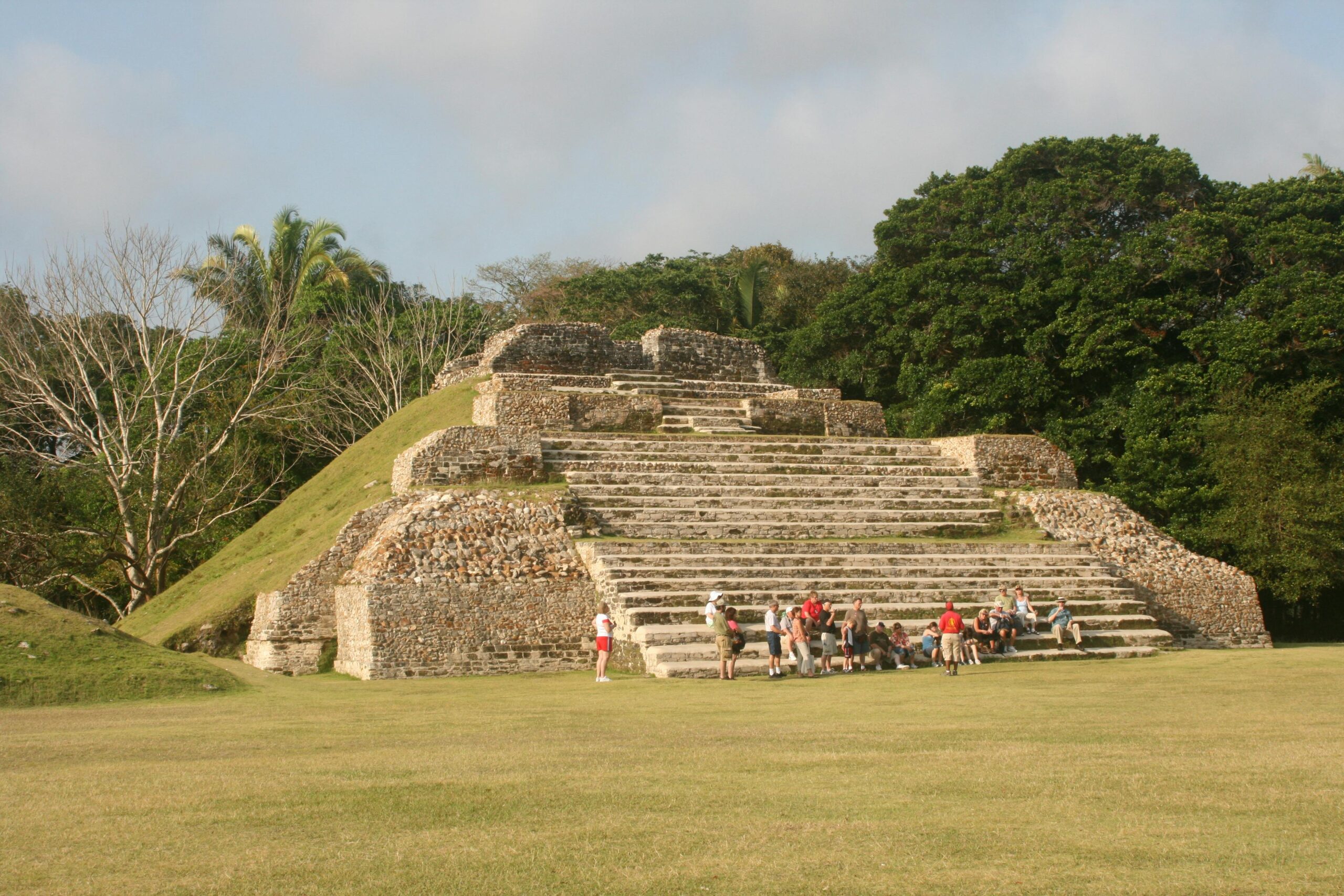
Throughout history, empires have risen and fallen, but their greatest legacy lies not in monuments or conquests—it lies in the knowledge they preserved and transmitted across generations.

📚 The Eternal Currency of Civilization
Knowledge has always been the most valuable asset of any civilization. While gold and territory can be lost, ideas transcend time and space, shaping societies long after empires crumble. From the ancient libraries of Alexandria to the digital repositories of today, humanity’s quest to preserve and share wisdom has driven progress and innovation.
The transmission of knowledge across generations represents one of the most critical functions of any empire or civilization. This process involves not just the preservation of information, but its interpretation, adaptation, and application to new contexts. Great empires understood that their survival depended not merely on military might or economic power, but on their ability to cultivate, protect, and disseminate knowledge.
🏛️ Ancient Empires: Architects of Intellectual Legacy
The ancient world provides remarkable examples of how empires served as vessels for knowledge transmission. The Mesopotamian civilizations developed cuneiform writing systems that allowed them to record everything from legal codes to astronomical observations. These clay tablets, buried for millennia, eventually revealed sophisticated mathematical systems and administrative practices that influenced subsequent civilizations.
Ancient Egypt’s contribution to knowledge preservation was equally profound. Their hieroglyphic system captured religious texts, medical practices, and architectural innovations. The papyrus scrolls that survived the ages demonstrate advanced understanding of mathematics, medicine, and engineering. The construction of the pyramids alone required sophisticated knowledge of geometry, astronomy, and materials science that engineers still study today.
The Library of Alexandria: Knowledge’s Greatest Monument
Perhaps no institution better symbolizes the power of knowledge transmission than the Library of Alexandria. Established in the 3rd century BCE under Ptolemaic rule, this legendary institution aimed to collect all the world’s knowledge. Scholars estimate it housed between 400,000 to 700,000 scrolls, covering subjects from philosophy to astronomy, mathematics to literature.
The library’s destruction remains one of history’s greatest tragedies, but its influence persisted. The scholars who studied there, including Euclid, Archimedes, and Eratosthenes, produced works that shaped Western thought for centuries. Their translations and commentaries on earlier texts ensured that Greek, Egyptian, and Mesopotamian knowledge survived into the modern era.
🕌 Medieval Knowledge Networks: East Meets West
The Islamic Golden Age, spanning roughly from the 8th to the 14th centuries, exemplifies how empires can serve as conduits for cross-cultural knowledge exchange. The Abbasid Caliphate, centered in Baghdad, established the House of Wisdom, where scholars translated Greek, Persian, and Indian texts into Arabic. This wasn’t merely translation—it was preservation and innovation.
Islamic scholars made groundbreaking advances in mathematics, introducing algebra and refining the concept of zero from Indian sources. They developed sophisticated astronomical instruments, advanced medical knowledge, and pioneered chemistry. Their work on optics, particularly by Ibn al-Haytham, laid foundations for modern scientific method centuries before the European Renaissance.
The Silk Road: Information Superhighway of the Ancient World
The Silk Road represented more than a trade route—it was an information network connecting the Roman Empire, Persia, India, and China. Ideas traveled alongside silk and spices. Buddhist philosophy moved from India to China, Chinese papermaking spread westward, and Greek scientific knowledge reached the East. This exchange enriched every civilization it touched.
Paper itself revolutionized knowledge transmission. Invented in China and spread through Islamic lands to Europe, paper made books more accessible than ever before. This technological transfer demonstrates how empires facilitated the movement of practical innovations that democratized knowledge.
📖 The European Renaissance: Rediscovering Lost Wisdom
The European Renaissance represented a conscious effort to recover and build upon ancient knowledge. The fall of Constantinople in 1453 sent Greek scholars fleeing westward, bringing precious manuscripts with them. Combined with Arabic translations of Greek texts returning through Spain and Sicily, Europe experienced an intellectual awakening.
The printing press, invented by Johannes Gutenberg around 1440, transformed knowledge transmission forever. Books that once took months to copy by hand could now be produced in weeks. This democratization of knowledge fueled the Protestant Reformation, the Scientific Revolution, and the Enlightenment. Ideas could spread faster and farther than ever before.
Colonial Empires and Knowledge Extraction
European colonial empires engaged in systematic knowledge extraction from conquered territories. They documented indigenous languages, mapped territories, catalogued flora and fauna, and studied local customs. While often serving exploitative purposes, this documentation preserved knowledge that might otherwise have been lost.
Colonial libraries and museums became repositories of global knowledge, though frequently obtained through questionable means. Today, debates about repatriating cultural artifacts and knowledge reflect ongoing tensions about who owns humanity’s intellectual heritage and how knowledge should be shared equitably.
🎓 Institutional Knowledge: Universities and Academies
Empires and states established institutions specifically designed to preserve and transmit knowledge. Medieval European universities, beginning with Bologna and Oxford, created standardized curricula and degree systems that persist today. These institutions transcended political boundaries, creating an international community of scholars.
Scientific academies, established in the 17th and 18th centuries, formalized knowledge creation and validation. The Royal Society in London, the French Academy of Sciences, and similar bodies established peer review systems and published journals. These mechanisms ensured that knowledge was tested, validated, and disseminated systematically.
💡 Industrial Revolution: Knowledge as Economic Power
The Industrial Revolution demonstrated conclusively that knowledge translates directly into economic and military power. Nations that developed scientific and technical education systems gained enormous advantages. The British Empire’s dominance owed much to its engineering prowess, while Germany’s rise in the late 19th century reflected its excellence in chemistry and physics.
Technical education became a priority for emerging powers. Japan’s Meiji Restoration consciously imported Western knowledge while preserving Japanese culture, transforming the nation from feudal society to industrial power in decades. This demonstrated that knowledge transfer could be strategic and selective, adapted to local contexts and needs.
Patents and Intellectual Property: Codifying Knowledge Ownership
Modern patent systems emerged to balance knowledge sharing with innovation incentives. By requiring inventors to publicly disclose their discoveries in exchange for temporary monopolies, patent systems advanced technical knowledge while rewarding creators. This system reflected changing attitudes about knowledge as property rather than common heritage.
🌐 The Digital Revolution: Knowledge Without Borders
The internet represents the most dramatic transformation in knowledge transmission since the printing press. Information that once required traveling to distant libraries is now instantly accessible globally. This democratization of access has profound implications for education, innovation, and social equality.
Digital archives preserve knowledge in unprecedented quantities. Projects like Google Books, the Internet Archive, and Wikipedia attempt to create universal knowledge repositories. Unlike the Library of Alexandria, these digital collections exist in multiple locations simultaneously, making complete destruction virtually impossible.
The Challenge of Information Overload
Paradoxically, universal access to information creates new challenges. Distinguishing reliable knowledge from misinformation requires critical thinking skills that educational systems struggle to develop. The sheer volume of available information can overwhelm rather than enlighten. Curation and verification become as important as access.
Search engines and algorithms now mediate our access to knowledge, raising questions about bias, manipulation, and control. Tech companies function as gatekeepers to information in ways that echo ancient empires’ control over knowledge. Understanding these dynamics becomes crucial for navigating the modern information landscape.
🔬 Scientific Knowledge: Building on Giants’ Shoulders
Modern science exemplifies cumulative knowledge transmission. Each generation builds upon previous discoveries, standing on the shoulders of giants as Newton famously stated. The scientific method provides a standardized framework for testing and validating knowledge, ensuring reliability across cultures and time periods.
International scientific collaboration accelerates knowledge creation and sharing. Projects like the Human Genome Project, the Large Hadron Collider, and climate research networks involve thousands of scientists across dozens of countries. This collaborative approach produces knowledge that transcends national boundaries and serves all humanity.
📱 Education Technology: The New Frontier
Educational technology promises to extend quality learning opportunities globally. Online courses, educational apps, and virtual classrooms make expert instruction accessible regardless of geography or economic status. This potential to democratize education represents a historic opportunity to break cycles of poverty and inequality.
Mobile devices particularly enable knowledge access in developing regions where traditional educational infrastructure remains limited. A smartphone can provide access to entire libraries, expert instruction, and collaborative learning communities. This mobile revolution in education mirrors how empires once built roads and ports to facilitate knowledge exchange.
🌍 Indigenous Knowledge: Recognizing Alternative Wisdom Systems
Contemporary understanding increasingly recognizes that Western scientific knowledge doesn’t encompass all valuable wisdom. Indigenous communities worldwide possess sophisticated knowledge about ecology, medicine, agriculture, and sustainable living developed over millennia. This knowledge deserves protection and respect as humanity faces environmental challenges.
Biopiracy and cultural appropriation highlight ongoing power imbalances in knowledge transmission. Pharmaceutical companies have patented compounds derived from traditional medicines without compensating source communities. Addressing these injustices requires new frameworks for recognizing intellectual property rights and ensuring equitable benefit-sharing.
🔮 Future Frontiers: Artificial Intelligence and Knowledge
Artificial intelligence represents both opportunity and challenge for knowledge transmission. AI systems can process vast information quantities, identifying patterns and connections beyond human capacity. Machine learning algorithms discover new knowledge by analyzing existing data in novel ways.
However, AI also raises concerns about knowledge validation and bias. Algorithms trained on historical data perpetuate historical biases. The “black box” nature of some AI systems makes it difficult to verify how conclusions are reached. As AI becomes more central to knowledge creation and curation, ensuring transparency and accountability becomes critical.
🎯 Preserving Knowledge for Future Generations
Digital preservation presents unique challenges. File formats become obsolete, storage media degrade, and platforms disappear. Organizations like the Long Now Foundation work on ultra-long-term preservation strategies, including the Rosetta Project creating physical backups of languages and the 10,000 Year Clock designed to shift perspectives toward longer timescales.
Climate change and political instability threaten physical knowledge repositories. The deliberate destruction of libraries and cultural sites in recent conflicts demonstrates that knowledge remains vulnerable. Redundancy, distributed storage, and format diversity provide insurance against catastrophic loss.

💪 The Enduring Legacy of Wisdom
Empires rise and fall, but the knowledge they cultivate and transmit endures as their most valuable legacy. From ancient clay tablets to digital clouds, humanity’s commitment to preserving and sharing wisdom across generations demonstrates our collective aspiration toward progress and understanding.
The democratization of knowledge access through technology offers unprecedented opportunities for human advancement. Yet technology alone cannot guarantee wisdom. Critical thinking, ethical frameworks, and commitment to truth remain essential for transforming information into genuine understanding.
As we face global challenges from climate change to pandemic disease, our ability to share knowledge across borders and generations becomes more critical than ever. The lessons from history’s great empires teach us that preserving wisdom and facilitating its transmission may be the most important work any civilization undertakes.
The power of knowledge lies not merely in possession but in transmission—in the generous act of sharing understanding so that future generations can see farther, think deeper, and build better. This eternal relay of wisdom across time represents humanity’s greatest achievement and our most solemn responsibility to those who come after us.