The night sky has fascinated humanity since our earliest days, and now sharing that wonder with others amplifies the experience exponentially. When we explore astronomical knowledge together, we unlock deeper understanding and create lasting connections.

🌌 Why Sharing Astronomical Knowledge Matters More Than Ever
In an age where technology connects us instantly yet often superficially, astronomy offers something profoundly different. When you point out Saturn’s rings to a friend through a telescope or explain why Mars appears red to a curious child, you’re not just sharing facts—you’re transmitting wonder itself. This shared experience of cosmic discovery creates bonds that transcend everyday interactions.
Astronomical knowledge serves as a universal language that crosses cultural, linguistic, and geographical boundaries. A supermoon looks equally magnificent whether viewed from Tokyo, New York, or Cape Town. This shared celestial experience reminds us that we’re all inhabitants of the same small planet, orbiting an ordinary star in an extraordinary universe.
Research consistently shows that collaborative learning enhances retention and deepens understanding. When astronomy enthusiasts gather to observe, discuss, and learn together, they create a synergistic environment where knowledge multiplies. A beginner’s fresh perspective can inspire a seasoned astronomer to see familiar objects differently, while experienced observers provide context that transforms random points of light into meaningful cosmic stories.
Building Communities Around Celestial Wonders
Astronomy clubs and societies have existed for centuries, but modern technology has revolutionized how we connect with fellow stargazers. Local astronomy groups organize star parties where dozens of telescopes point skyward simultaneously, allowing attendees to compare views and equipment while sharing observational techniques. These gatherings transform solitary observation into social celebration.
Online communities have exploded the possibilities for astronomical collaboration. Forums, social media groups, and dedicated platforms connect millions of astronomy enthusiasts worldwide. A question posted at midnight in Melbourne receives answers from observers in London by morning, creating a continuous global conversation about the cosmos.
Virtual star parties gained tremendous popularity during recent years, allowing people to observe together despite physical distance. Livestreams from observatories and individual telescopes let thousands simultaneously view rare celestial events, with real-time chat creating instant community among viewers scattered across continents.
The Educational Multiplier Effect 📚
When astronomical knowledge circulates through communities, it creates an educational multiplier effect. One person learns about stellar evolution, shares it with their astronomy club, and suddenly twenty people understand how stars are born, live, and die. Those twenty people then share with others, exponentially spreading cosmic literacy.
This peer-to-peer education often proves more effective than traditional top-down instruction. Learning from someone who recently mastered a concept themselves means receiving explanations tailored to common stumbling blocks and presented in accessible language. The shared journey of discovery creates empathy between learner and teacher that enhances the educational experience.
Citizen science projects exemplify this collaborative learning model perfectly. Programs like Galaxy Zoo, Planet Hunters, and asteroid search initiatives invite amateur astronomers to contribute meaningfully to professional research while simultaneously educating participants about methodology, analysis, and scientific process. Contributors aren’t just learning about astronomy—they’re doing real astronomy.
Technology as the Great Connector 🔭
Smartphone applications have democratized astronomical knowledge in unprecedented ways. Apps that identify constellations simply by pointing your phone skyward make celestial navigation accessible to everyone. These tools transform casual observers into informed explorers, and when friends share discoveries made through these apps, they create spontaneous learning moments.
Augmented reality features overlay astronomical information onto real-time sky views, displaying constellation names, planet positions, and satellite paths. Sharing these augmented views with others—whether in person or through screenshots and videos—spreads astronomical awareness organically through social networks.
Photography applications and processing software enable amateur astrophotographers to capture stunning images that rival professional work from decades past. When these images circulate through social media with explanatory captions, they educate while inspiring. A beautifully processed image of the Andromeda Galaxy accompanied by facts about its distance and size teaches millions about our cosmic neighborhood.
Real-Time Collaboration During Astronomical Events
Solar eclipses, meteor showers, and planetary alignments create natural opportunities for shared astronomical experiences. Social media explodes with photos, questions, and excitement during these events, creating global conversations that educate millions. Hashtags unite observers worldwide, allowing comparison of views from different locations and fostering understanding of how Earth’s rotation and position affect what we see.
Weather often frustrates individual observers, but shared knowledge networks help. When clouds obscure your local sky during a meteor shower peak, livestreams from clear-sky locations let you participate vicariously. Observers share real-time counts, describe fireball meteors, and post images, creating collective memory of events that individual circumstances might have rendered invisible.
These shared experiences during astronomical events strengthen community bonds. People who observed the same eclipse or stayed up together for a comet’s closest approach share a connection that persists long after the event concludes. These moments become reference points in personal astronomical journeys and community histories.
Mentorship: Passing the Cosmic Torch Forward
Every accomplished astronomer remembers someone who sparked their interest—a teacher who brought a telescope to school, a parent who pointed out planets, or a club member who patiently explained celestial mechanics. Mentorship remains astronomy’s most powerful knowledge-sharing mechanism, creating chains of inspiration that span generations.
Formal mentorship programs pair experienced astronomers with beginners, providing structured learning paths through equipment selection, observation techniques, and astronomical theory. These relationships often evolve beyond simple instruction into lasting friendships built on shared passion for the cosmos.
Informal mentorship happens constantly in astronomy communities. Someone struggling with telescope collimation at a star party receives guidance from a nearby observer. A forum post about confusing planetary motion gets detailed responses with diagrams and historical context. These micro-mentoring moments collectively build astronomical literacy across entire communities.
Inspiring the Next Generation of Stargazers ✨
Sharing astronomical knowledge with children creates lifelong learners and potential future scientists. When adults take time to show children the Moon’s craters, explain why stars twinkle, or describe the vast distances between celestial objects, they plant seeds of curiosity that may bloom into careers in science, technology, engineering, and mathematics.
School astronomy clubs and youth programs provide structured environments for this knowledge transfer. Young people learn not just astronomical facts but critical thinking, patience, attention to detail, and the satisfaction of mastering complex subjects. These skills transcend astronomy, benefiting students across all academic areas.
Public outreach events at observatories, planetariums, and science centers introduce thousands of children annually to astronomy’s wonders. Many professional astronomers trace their careers to childhood visits to such facilities, where someone took time to answer questions and encourage curiosity. This intergenerational knowledge transfer ensures astronomy’s continued vitality.
The Science Behind Social Learning in Astronomy
Cognitive science research demonstrates that social learning activates different neural pathways than solitary study. Discussing astronomical concepts with others forces articulation of understanding, revealing gaps in knowledge and solidifying correct information. Teaching others proves one of the most effective learning methods—explaining a concept requires deeper understanding than passive consumption.
Collaborative observation develops skills more efficiently than solo practice. Comparing views through different telescopes teaches how aperture, magnification, and optical quality affect what we see. Discussing whether that faint smudge is a galaxy or star cluster trains pattern recognition and critical analysis. These collaborative experiences accelerate learning curves dramatically.
The emotional dimension of shared astronomical experiences enhances memory formation. Neurological research shows that emotionally charged experiences create stronger, more durable memories. When you observe Jupiter’s moons with friends, accompanied by excited conversation and shared wonder, your brain encodes that information more permanently than if you’d observed alone.
Overcoming Misconceptions Through Dialogue
Astronomical misconceptions persist widely—confusion about Moon phases, misunderstandings of distances, and incorrect beliefs about planetary motions. Solitary learning rarely corrects these errors effectively because we don’t know what we don’t know. Collaborative learning environments naturally surface and address misconceptions through discussion and gentle correction.
When someone expresses a common misconception in a supportive community, experienced members can provide correct information with context explaining why the misconception arose. This approach proves more effective than mere correction—understanding why something seems true helps prevent similar errors. These teaching moments benefit not just the person asking but everyone witnessing the exchange.
Public astronomy forums contain searchable archives of these misconception-correcting conversations, benefiting countless future learners who discover them through searches. One well-explained answer to a common question may educate thousands over years, multiplying the value of knowledge sharing exponentially.
Creating Lasting Memories Under Starlight 🌠
Shared astronomical experiences create memories that endure lifetimes. Couples remember the night they observed Saturn together for the first time. Parents recall their child’s gasp upon seeing the Pleiades cluster through binoculars. Friends reminisce about staying up all night during a meteor shower, talking between shooting stars about life, dreams, and cosmic perspectives.
These memories anchor astronomical knowledge in personal narrative, making it meaningful beyond mere facts. You don’t just know that Saturn has rings—you remember the cold November night you first saw them, the friend beside you, the smell of hot chocolate, and the profound feeling of connecting with something billions of miles away.
Photography helps preserve and share these experiences. Astrophotography captures not just celestial objects but moments in time—the alignment of planets visible that particular week, the comet that won’t return for thousands of years, the eclipse shadow sweeping across your hometown. Sharing these images extends the experience to others and preserves it for future reflection.
Breaking Down Barriers to Astronomical Knowledge
Historically, astronomy required expensive equipment, access to dark skies, and specialized education. Modern knowledge sharing breaks down these barriers. Online resources provide free education equivalent to university courses. Virtual telescope networks allow anyone with internet access to control real telescopes. Community equipment loan programs ensure financial limitations don’t prevent observation.
Shared knowledge democratizes astronomy by making expertise accessible. Beginners no longer need to invest thousands in equipment before knowing whether they’ll enjoy the hobby—they can attend star parties, try different telescopes, and learn from experienced observers before making informed purchasing decisions. This accessibility expands and diversifies the astronomical community.
Language barriers diminish when astronomical images speak universally and translation tools enable cross-cultural dialogue. A beautiful nebula photograph needs no translation, yet it sparks conversations across languages. Communities develop multilingual resources, ensuring astronomical knowledge reaches everyone regardless of native language.
The Philosophical Dimension of Shared Cosmic Awareness 🌍
When we share astronomical knowledge, we’re doing more than transmitting information—we’re cultivating cosmic perspective. Understanding our place in the universe changes how we see ourselves and our world. Sharing this perspective creates communities united by humility about humanity’s cosmic insignificance and awe at our ability to comprehend our situation.
Carl Sagan’s concept of Earth as a “pale blue dot” resonates because it captures an emotional truth about our cosmic context. When we share this perspective—through images, conversations, or shared observation of Earth-rise from other worlds—we foster appreciation for our planet’s uniqueness and fragility. This shared awareness motivates environmental stewardship and peaceful coexistence.
Astronomy communities often transcend the divisions that fragment other social groups. Political affiliations, religious differences, and cultural boundaries fade when gazing at galaxies billions of light-years distant. The universe’s majesty provides common ground where diverse people connect through shared wonder, creating microcosms of the cooperation and understanding our species needs globally.
Practical Steps to Share Your Astronomical Journey
Starting to share astronomical knowledge requires no special credentials—only enthusiasm and willingness to learn alongside others. Attend local astronomy club meetings to connect with nearby stargazers. Most clubs welcome beginners warmly and provide resources for getting started. Even if you know nothing, your fresh questions often spark valuable discussions.
Social media offers effortless knowledge sharing opportunities. Post smartphone photos of the Moon with brief explanatory captions. Share exciting astronomy news articles. Comment thoughtfully on others’ astronomical posts. These small acts accumulate into meaningful contributions to collective astronomical literacy.
Consider volunteering at schools, libraries, or community centers to give astronomy presentations. Simple sidewalk astronomy—setting up a telescope in a public space and inviting passersby to look—introduces hundreds to celestial wonders with minimal planning. These guerrilla outreach efforts plant countless seeds of cosmic curiosity.
The Future of Collaborative Astronomical Discovery
Technology continues expanding possibilities for shared astronomical knowledge. Virtual reality promises fully immersive space experiences shareable across distances. Artificial intelligence helps amateur astronomers process data and identify interesting phenomena. Increasing satellite internet coverage brings astronomical resources to remote areas previously isolated from such knowledge.
Citizen science projects grow in sophistication and importance, with amateur contributions leading to genuine discoveries. Shared processing power from thousands of home computers analyzes radio telescope data searching for signals. Distributed networks of small telescopes detect asteroids and track near-Earth objects. These collaborative efforts accomplish what no individual could achieve alone.
The increasing accessibility of space itself—through private spaceflight, stratospheric balloons, and amateur satellite projects—creates new frontiers for collaborative exploration. Communities pool resources to launch experiments, capture unique imagery, and conduct observations impossible from Earth’s surface. These shared projects make space exploration democratically accessible for the first time.
Embracing Our Collective Cosmic Journey
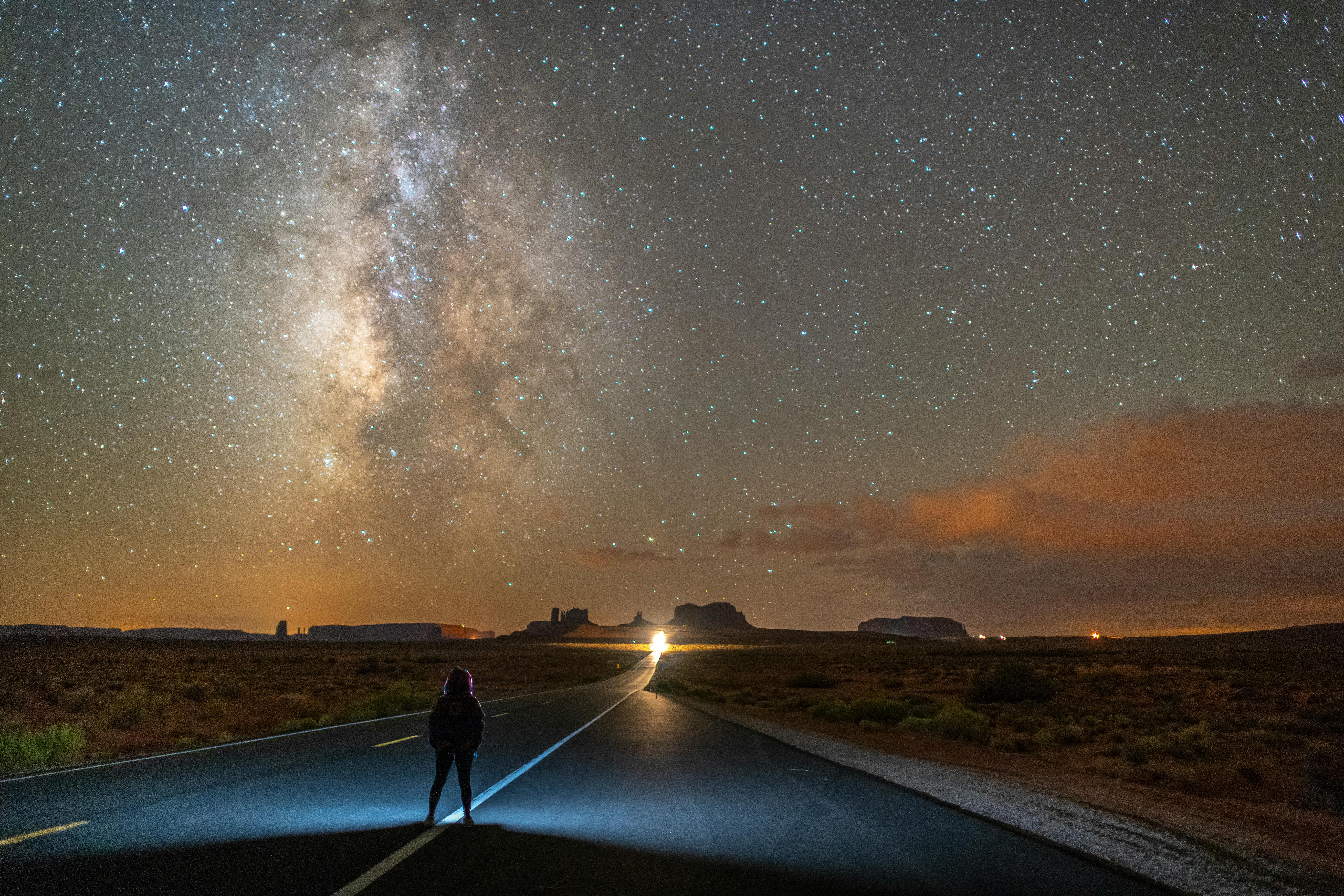
Astronomy reminds us that we’re all traveling together through space on our planetary spacecraft, orbiting our star at thousands of miles per hour while our galaxy rotates and the universe expands. This literal cosmic journey we share deserves metaphorical companionship—fellow travelers with whom we observe, learn, and marvel.
Shared astronomical knowledge enriches individual understanding while strengthening communities. It provides educational benefits, creates lasting memories, inspires future generations, and cultivates cosmic perspective. Whether you’re an experienced astronomer or someone who simply enjoys occasional sky-gazing, sharing your enthusiasm multiplies its value infinitely.
The universe’s wonders await our collective exploration. Every shared observation, answered question, and inspired newcomer expands humanity’s cosmic awareness. Together, we can ensure that astronomical knowledge—and the profound perspective it provides—reaches everyone who looks up at the night sky with wonder. The cosmos beckons us to explore it together, and in that shared exploration, we discover not just the universe but deeper connections with each other.