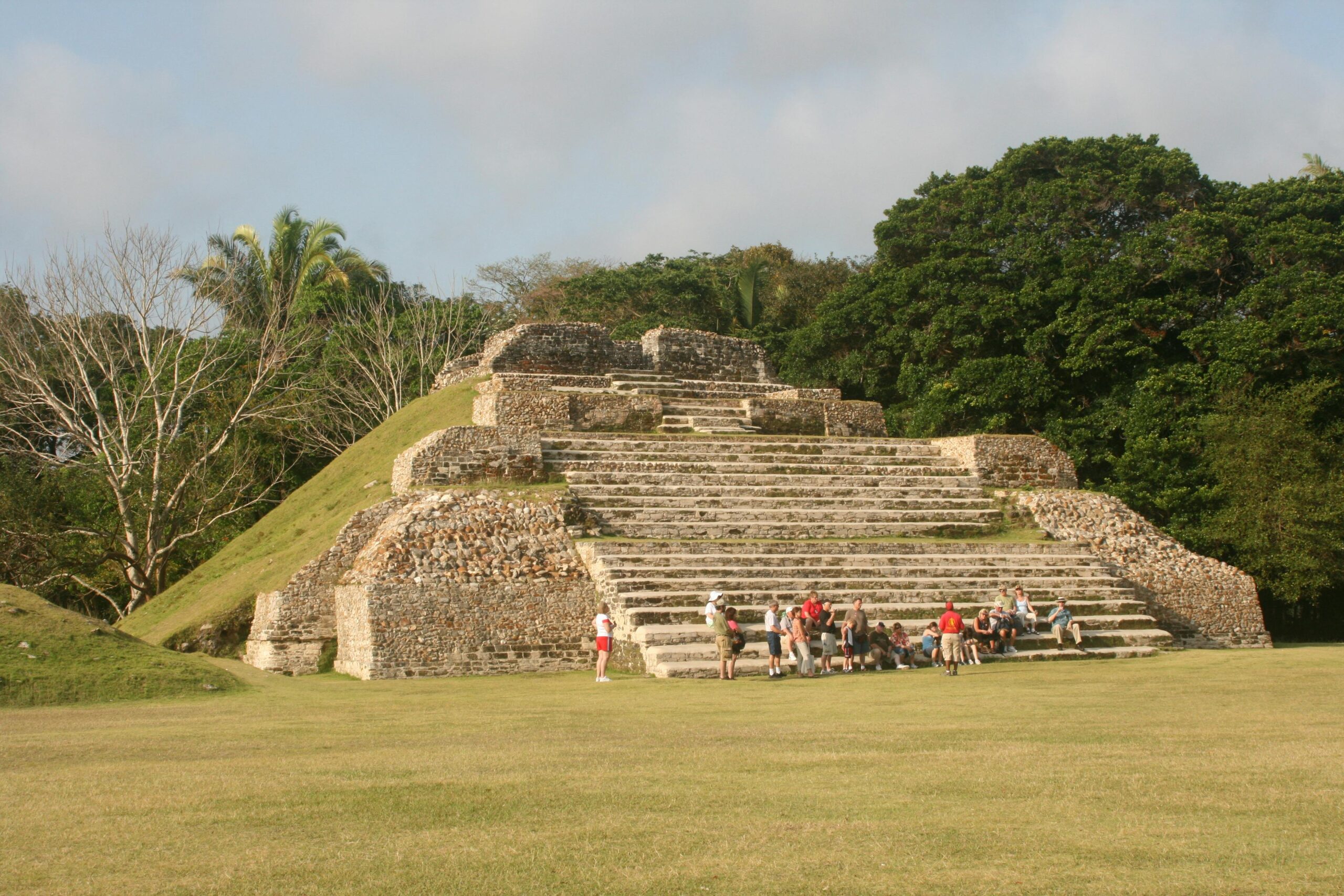
Throughout history, knowledge has transcended borders, shaping civilizations and creating vast empires built not on territory, but on ideas and information.

The movement of knowledge across cultural and geographical boundaries has been one of humanity’s most transformative forces. From ancient trade routes to modern digital networks, the exchange of information has shaped societies, sparked innovations, and created interconnected webs of understanding that bind our global community. This phenomenon represents more than mere data transfer—it embodies the essence of human progress and cultural evolution.
Today, we live in an unprecedented age where information flows faster and more freely than ever before. Yet the fundamental patterns of knowledge dissemination echo ancient practices, revealing timeless truths about how humans learn, adapt, and grow through shared wisdom. Understanding these empires of knowledge helps us navigate our information-rich world more effectively and appreciate the complex tapestry of human intellectual heritage.
🌍 Ancient Highways of Wisdom: The Original Information Networks
Long before the internet, sophisticated networks facilitated knowledge exchange across vast distances. The Silk Road stands as perhaps the most iconic example, serving not merely as a trade route for goods but as a superhighway for ideas, technologies, and cultural practices. Buddhist philosophy traveled from India to China, while papermaking techniques journeyed westward, revolutionizing communication throughout Europe and the Middle East.
The ancient Library of Alexandria represented another pivotal knowledge empire. This remarkable institution actively collected manuscripts from across the known world, creating what might be considered history’s first comprehensive database. Scholars from diverse cultures gathered there, translating texts, debating theories, and synthesizing knowledge from Egyptian, Greek, Persian, and Indian traditions into new frameworks of understanding.
Islamic Golden Age scholars established their own knowledge empire through translation movements, preserving and enhancing Greek and Roman learning while adding original contributions in mathematics, astronomy, medicine, and philosophy. The House of Wisdom in Baghdad became a crucible where different intellectual traditions merged, producing advances that would later fuel the European Renaissance.
The Role of Language in Knowledge Transfer
Language has always served as both bridge and barrier in knowledge dissemination. Translation work undertaken by medieval scholars created linguistic corridors through which ideas could flow between cultures. Arabic became a lingua franca of scientific discourse for centuries, just as Latin dominated European intellectual life and later English emerged as the primary language of global academia and technology.
The process of translation itself often sparked innovation. When concepts lacked direct equivalents in target languages, translators created new terminology, expanding vocabularies and sometimes generating entirely new ways of conceptualizing reality. This creative adaptation demonstrates how knowledge transformation occurs naturally during cross-cultural transmission.
📚 The Printing Press: Democratizing Information Access
Johannes Gutenberg’s printing press revolutionized knowledge distribution in ways that parallel today’s digital transformation. Before movable type, books remained luxury items, painstakingly copied by hand and accessible only to wealthy elites and religious institutions. The printing press shattered these barriers, enabling mass production of texts that spread information exponentially faster and more widely than ever before.
This technological breakthrough triggered cascading social changes. The Protestant Reformation gained momentum partly because printed pamphlets could disseminate reformist ideas rapidly across Europe. Scientific knowledge proliferated as researchers published findings that colleagues across continents could examine and build upon. The printing press didn’t just spread existing knowledge—it created ecosystems where new knowledge could flourish.
The standardization of texts through printing also had profound implications. Multiple readers could now engage with identical content, facilitating more precise scholarly discourse and enabling the development of standardized educational curricula. Knowledge became more verifiable and less subject to the distortions of repeated manual copying.
🚢 Colonial Networks and Knowledge Extraction
The age of European colonialism created complex knowledge empires with deeply problematic dimensions. While explorers, missionaries, and colonial administrators documented indigenous knowledge systems—including medicinal practices, agricultural techniques, and astronomical observations—this process often involved extraction without proper attribution or benefit to source communities.
Colonial botanical gardens and natural history museums became repositories of knowledge gathered from colonized territories. Plants with medicinal properties, navigational techniques, and textile production methods were studied, catalogued, and sometimes commercialized by colonial powers, creating patterns of intellectual property exploitation that continue to generate ethical debates today.
However, these networks also facilitated genuine exchange. Ideas about governance, philosophy, and social organization flowed in multiple directions. Indian mathematical concepts influenced European thought, African agricultural practices improved New World farming, and Chinese philosophical traditions reshaped European intellectual movements. The knowledge landscape remained more complex than simple extraction narratives suggest.
Universities as Knowledge Fortresses
Universities emerged as critical nodes in global knowledge networks, establishing standards for research, credentialing expertise, and creating international communities of scholars. Institutions like Oxford, Bologna, and later Harvard developed reputations that attracted students and faculty from worldwide, creating microcosms of intellectual diversity.
Academic journals formalized knowledge sharing, establishing peer review systems that attempted to maintain quality standards while facilitating rapid dissemination. Scientific societies formed international networks where researchers shared findings, debated theories, and collaborated across national boundaries. These institutional structures created knowledge empires based on meritocratic ideals, though access remained limited by socioeconomic factors.
📡 The Electronic Revolution: Broadcasting Knowledge
Radio and television transformed knowledge distribution again, enabling real-time information sharing across vast distances. Educational broadcasting brought university-level instruction into homes, while news programs created shared informational experiences for entire nations or language communities. The immediacy of electronic media changed how people understood current events and accessed expert knowledge.
These technologies also concentrated power in new ways. Broadcasting required significant infrastructure investment, creating gatekeepers who controlled information flow. Government broadcasters and corporate media networks determined what knowledge reached mass audiences, raising questions about access, bias, and representation that remain relevant in digital contexts.
International broadcasting services like BBC World Service, Voice of America, and Radio Moscow became tools of soft power, projecting cultural values and perspectives across borders. Knowledge dissemination became explicitly linked to geopolitical strategy, with nations recognizing information control as crucial to influence and security.
💻 The Digital Age: Unprecedented Knowledge Democracy
The internet represents the most dramatic transformation in knowledge distribution since writing itself. Information that once required travel to specialized libraries or expensive subscriptions now sits accessible through devices in billions of pockets. Search engines function as portals to humanity’s accumulated knowledge, while social media enables anyone to broadcast ideas globally.
Open-access movements challenge traditional academic publishing models, arguing that publicly-funded research should be freely available. Platforms like Wikipedia demonstrate collaborative knowledge creation at unprecedented scales, with millions of contributors creating comprehensive encyclopedias in hundreds of languages. Online courses from prestigious universities reach learners in remote locations who previously had no access to such resources.
This democratization brings profound benefits but also significant challenges. The same technologies that spread accurate information also amplify misinformation. The ease of publishing means expertise competes with speculation in crowded information marketplaces. Digital divides based on infrastructure, literacy, and language create new barriers even as old ones crumble.
Social Media as Knowledge Ecosystems
Social platforms have become major knowledge distribution channels, though ones optimized for engagement rather than accuracy. Academic researchers share findings on Twitter, craftspeople demonstrate techniques on YouTube, and community organizers coordinate through Facebook groups. These platforms enable niche knowledge communities to flourish globally while connecting practitioners across traditional boundaries.
However, algorithmic curation shapes knowledge exposure in ways users rarely understand fully. Recommendation systems create filter bubbles that reinforce existing beliefs while limiting exposure to challenging perspectives. The viral nature of social media rewards sensationalism over nuance, potentially degrading knowledge quality even as distribution expands.
🌐 Cross-Cultural Knowledge Integration in Practice
Effective knowledge transfer across cultures requires more than simple translation. Context, values, and epistemological frameworks differ significantly between cultures, affecting how information is received, interpreted, and applied. What counts as valid knowledge varies—some cultures prioritize empirical observation, others value experiential wisdom or spiritual insight, and many integrate multiple knowledge systems.
Development projects often fail when they ignore local knowledge systems, imposing external frameworks without engaging indigenous expertise. Successful initiatives recognize that communities possess sophisticated understanding of their environments, social systems, and needs. Genuine knowledge exchange involves dialogue rather than transmission, creating hybrid approaches that honor multiple perspectives.
Traditional ecological knowledge exemplifies valuable expertise that Western scientific frameworks historically dismissed. Indigenous communities developed sophisticated understandings of ecosystem management through generations of careful observation. Contemporary environmental science increasingly recognizes these knowledge systems as crucial for addressing climate change and biodiversity loss.
🔐 Intellectual Property and Knowledge Ownership
As knowledge becomes increasingly valuable economically, questions about ownership and access intensify. Patent systems aim to reward innovation while eventually releasing knowledge into public domains. Copyright protections balance creator rights against societal needs for information access. These frameworks originated in specific cultural contexts and don’t always translate well globally.
Tensions emerge particularly around traditional knowledge. Should indigenous communities have rights over ancestral practices when corporations seek to commercialize them? How can systems designed for individual inventors accommodate collectively-held cultural knowledge? These questions challenge Western intellectual property frameworks while raising fundamental issues about justice and equity in knowledge economies.
Open-source movements offer alternative models, demonstrating that collaborative knowledge development can drive innovation without traditional ownership structures. Linux, Wikipedia, and countless scientific databases show how openly-shared knowledge creates value differently than proprietary models. These approaches resonate with gift economy traditions found in many cultures worldwide.
🎓 Education Systems as Cultural Knowledge Bridges
Formal education systems shape how knowledge transfers between generations and across cultures. Curriculum choices determine which knowledge gets preserved and transmitted, inevitably reflecting cultural values and power dynamics. International education programs create opportunities for cross-cultural learning while potentially privileging certain knowledge systems over others.
Student exchange programs, international schools, and globally-oriented curricula expose learners to diverse perspectives and knowledge traditions. However, the dominance of Western educational models in international contexts sometimes marginalizes local knowledge systems. Balancing global competency with cultural rootedness remains an ongoing challenge for educators worldwide.
Language education plays a crucial role in knowledge access. English proficiency opens doors to vast information resources while potentially accelerating the erosion of linguistic diversity. Multilingual education approaches attempt to maintain heritage languages while providing access to global knowledge networks, recognizing that different languages encode unique conceptual frameworks.
🔬 Scientific Collaboration Across Boundaries
Modern scientific research increasingly depends on international collaboration. Major projects like the Large Hadron Collider or International Space Station require expertise and resources from multiple nations. Climate science, epidemiology, and oceanography study phenomena that transcend borders, demanding collaborative approaches to knowledge generation.
These collaborations face practical challenges including language barriers, different research cultures, funding structures, and publication practices. Yet they also demonstrate knowledge empires at their best—diverse perspectives combining to tackle complex problems that no single culture could solve alone. The global response to COVID-19, despite imperfections, showed unprecedented speed in knowledge sharing across scientific communities worldwide.
Citizen science initiatives extend collaboration beyond traditional research institutions, engaging public participants in data collection and analysis. These projects democratize scientific knowledge production while generating valuable datasets and fostering scientific literacy among participants from diverse backgrounds.
🚀 Future Trajectories: Knowledge in an Interconnected World
Artificial intelligence and machine learning are transforming knowledge processing, enabling pattern recognition across massive datasets that exceed human analytical capacity. Translation technologies increasingly break down language barriers, though subtlety and cultural context still challenge automated systems. Virtual and augmented reality promise immersive knowledge experiences that transcend traditional text-based formats.
These technologies raise new questions about knowledge authenticity, authority, and access. As AI systems generate synthetic content, distinguishing human-created knowledge from machine outputs becomes challenging. Deepfakes and sophisticated misinformation threaten to undermine trust in information sources. Building robust systems for knowledge verification becomes crucial as technological capabilities expand.
The future of knowledge empires likely involves more distributed, networked structures rather than centralized institutions. Blockchain technologies might enable new models for credentialing expertise and tracking knowledge provenance. Decentralized autonomous organizations could coordinate research and knowledge sharing without traditional institutional hierarchies. These possibilities excite some observers while concerning others about quality control and accountability.

🌟 Building Inclusive Knowledge Futures
Creating truly global knowledge empires that serve humanity equitably requires intentional effort. Digital infrastructure must reach underserved communities, multilingual resources need development, and diverse epistemologies deserve recognition alongside dominant frameworks. Knowledge justice means ensuring that communities contributing information also benefit from its application and commercialization.
This vision requires reimagining institutions, technologies, and practices around knowledge. Educational systems should prepare learners to navigate multiple knowledge traditions critically. Research frameworks must value diverse methodologies. Technology platforms need design that promotes accuracy over engagement metrics. Policy structures should balance openness with appropriate protections for vulnerable knowledge holders.
The empires of knowledge that shaped our past and present will continue evolving, influenced by technological capabilities, geopolitical dynamics, and cultural values. By understanding these patterns—how information has always crossed borders, adapted to new contexts, and enriched receiving cultures—we can work toward futures where knowledge truly serves as a common heritage, accessible to all and enriched by our magnificent diversity. The greatest knowledge empire will be one that belongs to everyone, built collaboratively across all boundaries that once divided us.