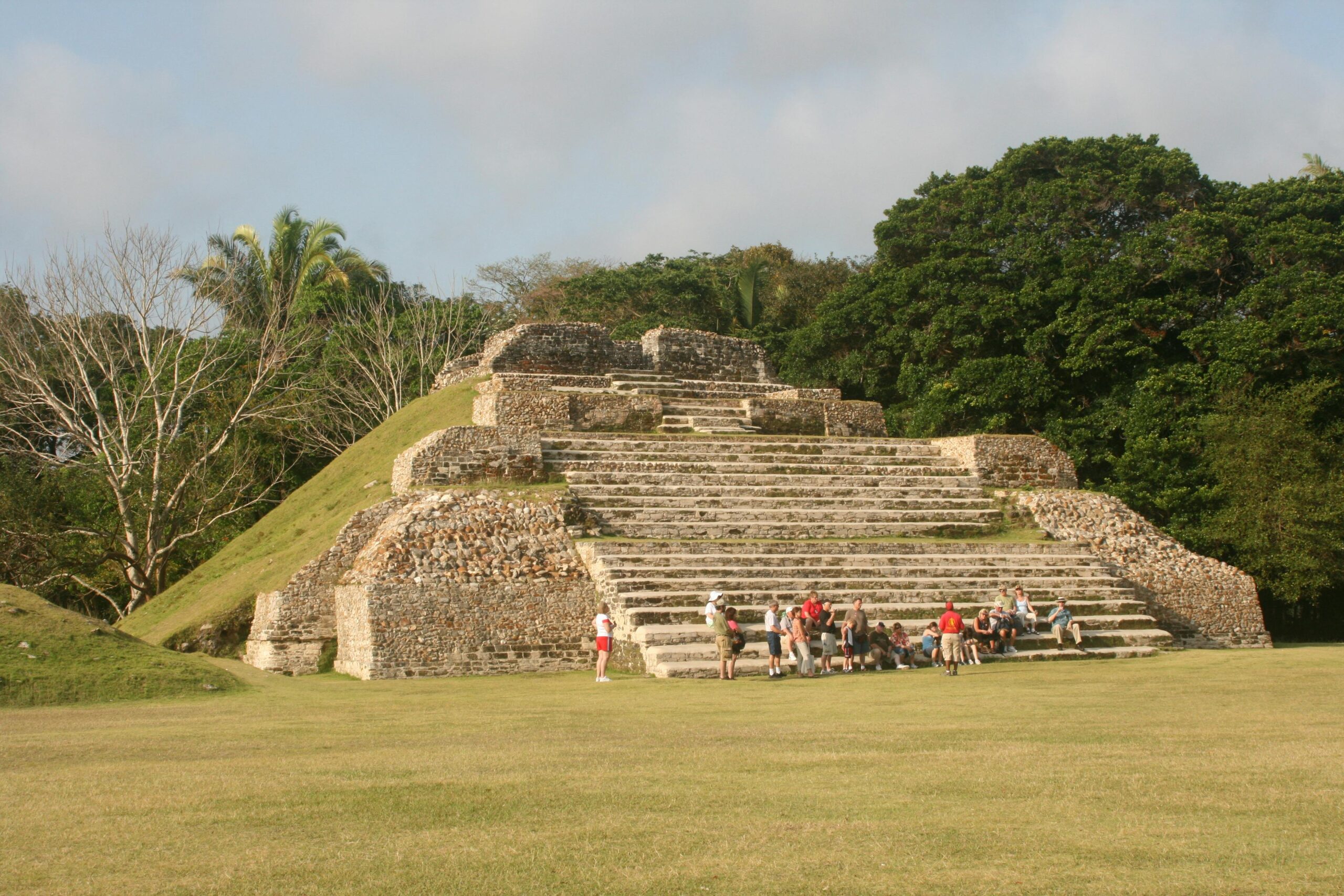
Mathematics transcends borders, languages, and time itself, weaving together humanity’s quest for understanding through numbers, patterns, and logic across every civilization.

🌍 The Universal Language We All Speak
When we think about mathematics, we often picture sterile classrooms, complex equations, or standardized tests. Yet the true story of mathematical knowledge is far more colorful, diverse, and interconnected than most educational systems acknowledge. Throughout human history, different cultures have developed sophisticated mathematical systems, each contributing unique perspectives and methodologies that continue to influence how we solve problems today.
The mathematical traditions we inherit aren’t the product of isolated genius or singular civilizations. Instead, they represent a magnificent tapestry woven from threads spanning continents and millennia. From the ancient Babylonians who calculated astronomical phenomena to the Maya who developed an intricate calendar system, from Chinese mathematicians who solved polynomial equations to Indian scholars who gave us the concept of zero—each tradition has enriched our collective mathematical heritage.
Understanding these shared traditions isn’t merely an academic exercise. It reveals fundamental truths about human cognition, cultural exchange, and the universal patterns that govern our world. More importantly, recognizing the multicultural roots of mathematics can transform how we teach, learn, and apply mathematical thinking in our increasingly interconnected world.
📜 Ancient Mesopotamia: Where Numbers First Took Shape
The Babylonians developed one of humanity’s earliest sophisticated numerical systems around 3000 BCE. Their base-60 system—sexagesimal notation—still echoes through our modern world every time we check a clock or measure an angle. Why do we have 60 seconds in a minute and 360 degrees in a circle? The answer lies in clay tablets created thousands of years ago in the Fertile Crescent.
This ancient civilization didn’t just count—they calculated. Babylonian mathematicians developed complex algorithms for solving quadratic equations, computed compound interest for loans, and created astronomical tables of remarkable precision. Their mathematical texts reveal a practical approach born from the needs of agriculture, commerce, and timekeeping, yet sophisticated enough to tackle abstract problems that would challenge modern students.
The transmission of Babylonian mathematical knowledge through Greek scholars, then to Islamic mathematicians, and eventually to Renaissance Europe demonstrates how mathematical ideas flow across cultural boundaries. Each civilization that encountered these concepts didn’t simply copy them—they adapted, refined, and expanded upon them, creating something new while honoring what came before.
🏛️ Egyptian Geometry: Building the Impossible
How do you construct pyramids that have stood for over 4,500 years with nothing but rope, simple tools, and mathematical knowledge? The ancient Egyptians developed practical geometry specifically for surveying, architecture, and construction. Their famous Rhind Mathematical Papyrus reveals problem-solving approaches that remain relevant today.
Egyptian mathematics was inherently practical, focused on solving real-world problems rather than abstract theorems. They calculated areas and volumes, divided resources fairly, and created architectural wonders that modern engineers still study with admiration. Their unit fractions—expressing all fractions as sums of different unit fractions—might seem cumbersome to modern mathematicians, yet this system served their needs perfectly for centuries.
The Egyptian approach reminds us that mathematical systems develop to serve specific cultural needs. There’s no single “correct” way to conceptualize numbers or space—different contexts call for different mathematical tools and perspectives.
🎋 Chinese Mathematics: Algorithms and Innovation
While Western mathematical history often centers on Greek geometry, Chinese mathematicians were developing equally sophisticated but distinctly different approaches. The “Nine Chapters on the Mathematical Art,” compiled around 100 CE, presented systematic methods for solving practical problems in agriculture, engineering, taxation, and commerce.
Chinese mathematicians pioneered matrix methods for solving systems of linear equations over a thousand years before similar techniques appeared in Europe. They developed sophisticated algorithms, worked with negative numbers centuries before European acceptance, and created remarkably accurate approximations of π. The Chinese remainder theorem, still taught in number theory courses worldwide, demonstrates the enduring influence of this tradition.
Perhaps most significantly, the Chinese mathematical tradition emphasized algorithmic thinking—step-by-step procedures for solving problems. This computational approach resonates powerfully in our modern digital age, where algorithms drive everything from search engines to artificial intelligence.
The Magic of Chinese Rod Numerals
The rod numeral system used in ancient China employed a place-value decimal system long before such notation appeared elsewhere. Mathematicians would arrange counting rods on a calculating surface, creating a physical representation of numbers that made complex calculations manageable. This tangible approach to mathematics offers insights into how different cultures conceptualize abstract numerical concepts through concrete representations.
🕉️ Indian Contributions: Zero Changes Everything
The Indian subcontinent’s contributions to mathematics fundamentally transformed human civilization. The concept of zero as both a placeholder and a number in its own right—developed by Indian mathematicians between the 5th and 7th centuries—revolutionized calculation and opened pathways to advanced mathematics that would have been impossible otherwise.
Indian mathematicians didn’t stop with zero. They developed sophisticated techniques for arithmetic operations, worked with negative numbers and irrational numbers, and created the foundations of trigonometry. The decimal place-value system we use daily originated in India, representing perhaps the most influential mathematical notation ever devised.
Brahmagupta, Aryabhata, and Bhaskara made contributions that rippled through Islamic mathematics and eventually reached Europe, where they sparked the scientific revolution. The algorithms we use for basic arithmetic—the methods taught to children worldwide—are refinements of techniques developed in ancient India.
🌙 Islamic Golden Age: Bridging East and West
Between the 8th and 14th centuries, scholars in the Islamic world created a mathematical renaissance that preserved, synthesized, and dramatically extended mathematical knowledge from diverse traditions. The House of Wisdom in Baghdad became a center where Greek, Indian, Persian, and Babylonian mathematical texts were translated, studied, and advanced.
The word “algebra” itself comes from the Arabic “al-jabr,” appearing in the title of Muhammad al-Khwarizmi’s groundbreaking 9th-century text. Al-Khwarizmi’s work systematized the solving of linear and quadratic equations, creating a discipline that would become fundamental to all advanced mathematics. His name also gave us the word “algorithm,” highlighting his emphasis on systematic problem-solving procedures.
Islamic mathematicians didn’t merely preserve ancient knowledge—they transformed it. They developed spherical trigonometry for astronomical calculations, advanced number theory, explored combinatorics, and made significant contributions to geometry. Omar Khayyam, known in the West primarily as a poet, solved cubic equations and explored the foundations of non-Euclidean geometry centuries before European mathematicians tackled these problems.
The Power of Cultural Exchange ✨
The Islamic mathematical tradition exemplifies how cultural exchange accelerates innovation. By bringing together knowledge from diverse sources, Islamic scholars created something greater than the sum of its parts. They asked new questions, developed new methods, and transmitted this enriched mathematical heritage to Europe through Spain and Sicily, helping spark the Renaissance.
🗿 Mesoamerican Mathematics: Independent Innovation
While Old World civilizations were exchanging mathematical ideas, the Maya and other Mesoamerican cultures developed sophisticated mathematics entirely independently. The Maya vigesimal (base-20) system included a concept of zero developed independently from the Indian tradition—remarkable evidence that certain mathematical insights emerge naturally from human engagement with quantity and pattern.
Mayan mathematics served primarily astronomical and calendrical purposes. Their intricate calendar system, combining multiple cycles with mathematical precision, allowed them to predict celestial events with remarkable accuracy. The Dresden Codex contains elaborate astronomical tables demonstrating mathematical sophistication that challenges assumptions about “primitive” cultures.
The independent development of similar mathematical concepts across isolated cultures suggests that mathematics reflects something fundamental about reality and human cognition. Different cultures may use different notations and emphasize different applications, but certain mathematical truths emerge universally.
🔄 How Mathematical Ideas Travel and Transform
The history of mathematics is a story of constant exchange, adaptation, and transformation. Ideas rarely move unchanged from one culture to another. Instead, they’re reinterpreted, expanded, and integrated into new conceptual frameworks. The Indian numeral system transformed as it moved through Islamic mathematics to Europe, becoming what we now call “Arabic numerals” despite their Indian origins.
This transmission process enriches mathematics. Each culture that engages with a mathematical concept brings unique perspectives, asks different questions, and discovers new applications. The Greek emphasis on proof and logical deduction combined with the Indian focus on calculation and the Chinese emphasis on algorithms to create the multifaceted mathematical tradition we inherit today.
Trade routes, conquest, scholarly correspondence, and translation projects all facilitated mathematical exchange. The Silk Road wasn’t just a conduit for goods—it was a highway for ideas. Mathematical texts traveled alongside spices and textiles, carrying knowledge that would transform civilizations far from where it originated.
📱 Modern Mathematics: Still Learning from Diversity
The multicultural heritage of mathematics remains relevant in our contemporary world. As we face complex global challenges—climate change, pandemic modeling, artificial intelligence ethics, economic inequality—we benefit from diverse mathematical perspectives and problem-solving approaches.
Contemporary mathematics education is beginning to recognize the importance of this diverse heritage. Rather than presenting mathematics as a European invention, progressive curricula highlight contributions from all civilizations. This approach not only provides historical accuracy but also helps students from diverse backgrounds see themselves reflected in mathematical history.
Computational thinking, data science, and algorithmic problem-solving—skills essential for the digital age—draw on mathematical traditions from multiple cultures. The algorithmic emphasis of Chinese mathematics, the systematic proof-based approach of Greek mathematics, and the computational fluency developed in Indian mathematics all contribute to modern mathematical practice.
Why Diversity in Mathematics Matters 🌟
Recognizing the multicultural roots of mathematics has practical implications beyond historical accuracy. Research shows that students engage more deeply with subjects when they understand their cultural relevance and see diverse contributors. When mathematics is presented as a human endeavor spanning all cultures rather than the product of a single tradition, it becomes more accessible and meaningful.
Different cultural approaches to mathematical problems also inspire innovation. Japanese techniques for mental calculation, Vedic mathematics from India, and indigenous counting systems all offer alternative perspectives that can enhance mathematical understanding and problem-solving flexibility.
🧮 Practical Applications of Cross-Cultural Mathematical Wisdom
The principles underlying shared mathematical traditions have concrete applications in education, technology, and problem-solving. Understanding that multiple valid approaches exist for the same mathematical problem encourages creative thinking and adaptability—skills crucial in rapidly changing technological landscapes.
In education, incorporating diverse mathematical traditions can help students who struggle with conventional approaches. Some students grasp concepts more readily through geometric visualization (emphasized in Greek mathematics), while others prefer algorithmic procedures (highlighted in Chinese mathematics) or numerical exploration (common in Indian mathematics). Recognizing these different learning styles as reflections of legitimate mathematical traditions validates diverse cognitive approaches.
Technology development also benefits from multicultural mathematical perspectives. Alternative number systems, different calculation methods, and varied approaches to representing information all contribute to innovation in computing, cryptography, and data visualization. The base-60 system of ancient Babylon finds new relevance in computer science, while ancient algorithms inspire modern computational methods.
🌐 Building Bridges Through Numbers
Mathematics offers unique opportunities for cross-cultural understanding and collaboration. Unlike languages, which create barriers between cultures, mathematical notation provides a genuinely universal communication system. A equation written in China can be understood in Brazil, Kenya, or Norway without translation.
This universality makes mathematics a powerful tool for international collaboration on global challenges. Climate models, epidemiological predictions, economic forecasts, and technological innovations all rely on mathematical frameworks that transcend national boundaries. The shared mathematical heritage of humanity enables scientists and engineers worldwide to work together effectively.
Yet while mathematical notation is universal, the cultural contexts that shape how we think about and apply mathematics vary significantly. Recognizing this diversity enriches international collaboration, preventing the assumption that one cultural perspective on mathematical applications is inherently superior.
🎓 Transforming Education Through Cultural Mathematics
Educational systems worldwide are beginning to integrate ethnomathematics—the study of how different cultures develop and use mathematical concepts. This approach doesn’t dilute mathematical rigor but rather enriches it by showing how universal mathematical principles manifest across diverse cultural contexts.
Students learning about Egyptian fractions, Chinese rod numerals, or Mayan calendar calculations aren’t just studying history—they’re developing mathematical flexibility and cultural awareness simultaneously. These alternative systems challenge students to think beyond familiar algorithms, deepening conceptual understanding.
Moreover, acknowledging the contributions of diverse cultures to mathematics helps address persistent equity issues in mathematical education. When students from underrepresented backgrounds see their cultural heritage reflected in mathematical history, it counters stereotypes and provides inspiring role models. Mathematics becomes not “someone else’s subject” but a universal human endeavor to which all cultures have contributed.
🚀 The Future of Shared Mathematical Knowledge
As humanity faces increasingly complex challenges requiring mathematical solutions, our shared mathematical heritage becomes more valuable than ever. Artificial intelligence, quantum computing, climate modeling, and biotechnology all push the boundaries of mathematical knowledge in ways that benefit from diverse perspectives and approaches.
The internet has created unprecedented opportunities for mathematical collaboration across cultures. Mathematicians in different countries routinely work together on problems, sharing insights and methodologies that blend traditions. Open-source mathematical software, online problem-solving communities, and collaborative research platforms all facilitate this exchange.
Looking forward, the next great mathematical innovations will likely emerge from this cross-cultural fertilization. Just as Islamic scholars combined Greek, Indian, and Persian mathematics to create algebra, future breakthroughs may come from synthesizing computational approaches from different traditions, applying ancient problem-solving wisdom to modern challenges, or discovering new applications for mathematical concepts developed centuries ago in cultures far from where they’re now being applied.

🎯 Embracing Our Shared Mathematical Legacy
The story of mathematics is ultimately a story about human curiosity, creativity, and collaboration across time and space. No single culture invented mathematics—instead, humanity collectively developed this powerful tool for understanding reality. Each tradition contributed unique insights, and the ongoing exchange between cultures has consistently driven mathematical progress.
Recognizing this shared heritage doesn’t diminish any culture’s contributions—it celebrates them all while acknowledging how interconnected our mathematical knowledge truly is. The Babylonian astronomer, the Chinese algebraist, the Indian computational genius, the Islamic scholar, the Mayan calendar maker, and the Greek geometer all contributed to the mathematical knowledge we use daily.
As we continue advancing mathematical understanding in the 21st century and beyond, remembering these roots keeps us humble, curious, and open to diverse perspectives. The power of shared mathematical traditions lies not just in the specific techniques and concepts they’ve given us, but in demonstrating that humanity’s greatest achievements come from exchange, synthesis, and building upon the knowledge of those who came before us—regardless of when or where they lived.
Mathematics remains humanity’s most successful collaborative project, spanning millennia and encompassing all cultures. By honoring and learning from this diversity, we unlock not just the power of shared mathematical traditions, but the potential for future innovations that will continue this magnificent human journey through cultures and numbers.