Ancient ruins hold stories of civilizations long past, and modern 3D preservation technology is revolutionizing how we capture, study, and share these invaluable historical treasures with the world.

🏛️ The Digital Renaissance of Archaeological Conservation
The intersection of archaeology and technology has opened unprecedented possibilities for preserving our collective heritage. As natural disasters, climate change, and human conflict threaten historical sites worldwide, digital preservation has emerged as a crucial safeguard against irreversible loss. Three-dimensional scanning, photogrammetry, and virtual reconstruction are transforming how archaeologists document, analyze, and present ancient structures to both academic communities and the general public.
Traditional documentation methods, while valuable, often fell short in capturing the intricate details and spatial relationships that define historical architecture. Sketches, photographs, and written descriptions could only convey limited perspectives. Today’s advanced scanning technologies create millimeter-precise digital twins of archaeological sites, preserving every weathered stone, carved inscription, and architectural nuance in perpetuity.
Revolutionary Technologies Bringing the Past into Focus
The toolkit available to modern archaeologists would astound pioneers of the field. LiDAR (Light Detection and Ranging) systems emit millions of laser pulses to map environments with extraordinary accuracy, penetrating vegetation to reveal hidden structures. Photogrammetry transforms thousands of overlapping photographs into detailed 3D models. Ground-penetrating radar unveils subsurface features without disturbing the soil.
Drone technology has democratized aerial documentation, making comprehensive site surveys accessible and affordable. What once required expensive helicopter rentals and specialized equipment can now be accomplished with consumer-grade drones equipped with high-resolution cameras. These flying platforms capture data from angles previously impossible, creating complete spatial records of archaeological complexes.
The Power of Point Clouds and Polygonal Meshes
At the heart of 3D preservation lies the concept of point clouds—collections of millions of data points in three-dimensional space. Each point represents a specific location on an object’s surface, complete with precise coordinates and often color information. When combined, these points create incredibly detailed representations of physical structures.
Processing software transforms raw point cloud data into polygonal meshes—networks of connected triangles that form continuous surfaces. These meshes can be textured with photographic imagery, producing photorealistic digital models indistinguishable from the actual ruins. The resulting files become permanent digital archives, immune to the deterioration affecting their physical counterparts.
🗿 Landmark Projects Reshaping Archaeological Practice
Several high-profile preservation initiatives demonstrate the transformative potential of 3D technology. The CyArk project has digitally documented over 200 cultural heritage sites across 50 countries, creating a digital library of humanity’s most significant monuments. When ISIS deliberately destroyed Palmyra’s ancient temples in Syria, CyArk’s detailed scans provided essential data for potential reconstruction efforts.
The Zamani Project has focused specifically on African heritage sites, addressing the historical imbalance in archaeological documentation. Their work at Great Zimbabwe, Lalibela’s rock-hewn churches, and other locations ensures these African treasures receive the same preservation attention as their European and Asian counterparts.
Machu Picchu’s Digital Immortality
Peru’s iconic Incan citadel has undergone extensive 3D documentation, creating a complete digital replica of the mountain-top complex. This project serves multiple purposes: monitoring structural changes over time, planning conservation interventions, limiting physical tourist impact through virtual experiences, and providing unprecedented research access to scholars worldwide.
The Machu Picchu initiative employed terrestrial laser scanning combined with aerial photogrammetry, capturing everything from individual stone blocks to the site’s relationship with the surrounding landscape. Researchers can now study architectural features remotely, testing hypotheses without physically handling fragile structures.
From Data Collection to Knowledge Creation
Raw 3D data represents only the beginning of the preservation journey. Sophisticated analysis tools extract meaningful insights from digital models, answering questions about construction techniques, building chronology, and cultural practices. Computational analysis can identify tool marks invisible to the naked eye, revealing information about ancient craftsmanship and technology transfer between cultures.
Machine learning algorithms trained on architectural features can detect patterns across multiple sites, identifying stylistic connections that suggest cultural exchange or shared origins. These computational approaches complement traditional archaeological methods, offering new perspectives on long-standing historical puzzles.
Virtual Reconstruction and Hypothesis Testing
Digital models provide perfect platforms for testing reconstruction hypotheses without risking damage to actual ruins. Archaeologists can virtually “rebuild” collapsed structures, experimenting with different configurations until finding arrangements that match archaeological evidence. These reconstructions often reveal functional aspects of ancient architecture that aren’t apparent from ruins alone.
The Temple of Bel in Palmyra, destroyed in 2015, has been virtually reconstructed using pre-destruction documentation. While physical reconstruction remains controversial and technically challenging, the digital version ensures this architectural masterpiece continues to inform scholarship and inspire public appreciation.
🌍 Making History Accessible to Everyone
Perhaps the most democratizing aspect of 3D preservation is its potential to make remote or restricted sites accessible to global audiences. Virtual reality experiences transport users to archaeological sites continents away, while augmented reality applications overlay reconstructed structures onto existing ruins during physical visits.
Museums increasingly incorporate 3D-scanned artifacts into exhibits, allowing visitors to manipulate digital objects freely—something impossible with fragile originals. Interactive displays let users explore multiple layers of archaeological sites, toggling between different time periods or excavation phases to understand how interpretations evolve.
Educational Transformation Through Digital Heritage
Educational institutions leverage 3D archaeological data to create immersive learning experiences. Students examine artifacts with microscopic detail, explore reconstructed ancient cities, and engage with history in viscerally immediate ways. Geography, history, and art classes benefit from resources that previously required expensive field trips or remained entirely inaccessible.
Open-access initiatives share 3D models through platforms like Sketchfab, where anyone with an internet connection can explore Petra’s Treasury, Angkor Wat’s towers, or Easter Island’s moai. This accessibility transforms public engagement with cultural heritage, fostering global appreciation for humanity’s diverse historical achievements.
Challenges and Considerations in Digital Preservation
Despite remarkable advantages, 3D preservation faces significant challenges. Data storage requirements are enormous—comprehensive site documentation can generate terabytes of information requiring long-term archival solutions. File format obsolescence threatens accessibility; today’s cutting-edge formats may become unreadable as software evolves.
Funding represents another persistent obstacle. Sophisticated scanning equipment and specialized personnel require substantial investment, often difficult to secure for sites in developing nations or those lacking UNESCO World Heritage status. This creates preservation disparities, with well-funded sites receiving comprehensive documentation while equally significant locations remain undocumented.
Ethical Questions and Cultural Sensitivity
Digital preservation raises complex ethical questions about ownership, access, and representation. Who controls digital archives of cultural heritage? Should 3D models of sacred sites be freely accessible, potentially violating cultural protocols? How do we ensure indigenous communities participate meaningfully in documenting their ancestral heritage rather than being passive subjects of external projects?
The debate over reconstructing destroyed heritage sites illustrates these tensions. Some argue digital data should guide physical reconstruction, preserving architectural continuity. Others contend that destruction itself constitutes historical reality, and reconstruction creates inauthentic replicas that erase rather than preserve history.
🔬 The Science Behind the Scans
Understanding the technical foundations of 3D preservation illuminates both its capabilities and limitations. Laser scanning systems measure distances by calculating the time light takes to reflect from surfaces back to sensors. Accuracy depends on factors including scan resolution, target distance, surface reflectivity, and environmental conditions.
Photogrammetry relies on identifying common points across multiple photographs, using geometric principles to calculate three-dimensional positions. Software algorithms match thousands of corresponding points, building spatial models through triangulation. This technique excels at capturing texture and color but requires careful planning to ensure adequate photographic overlap and lighting consistency.
Integration with Traditional Archaeological Methods
Rather than replacing conventional excavation and documentation, 3D technology complements established practices. Physical examination remains essential for understanding stratigraphy, identifying organic materials, and collecting samples for dating analysis. Digital tools enhance traditional methods by providing precise spatial context and enabling sophisticated analysis impossible through manual observation alone.
Progressive archaeological projects integrate multiple documentation approaches, combining hand-drawn field notes with photogrammetric models, traditional surveying with laser scanning, and excavation photography with structured light scanning of individual artifacts. This multi-method approach creates comprehensive archives supporting diverse research questions and analytical frameworks.
Future Horizons in Digital Heritage Conservation
Emerging technologies promise to further revolutionize archaeological preservation. Artificial intelligence applications automate model processing, dramatically reducing the time required to transform raw scans into usable models. Neural networks reconstruct damaged or incomplete structures by learning from intact examples, offering evidence-based extrapolations of missing architectural elements.
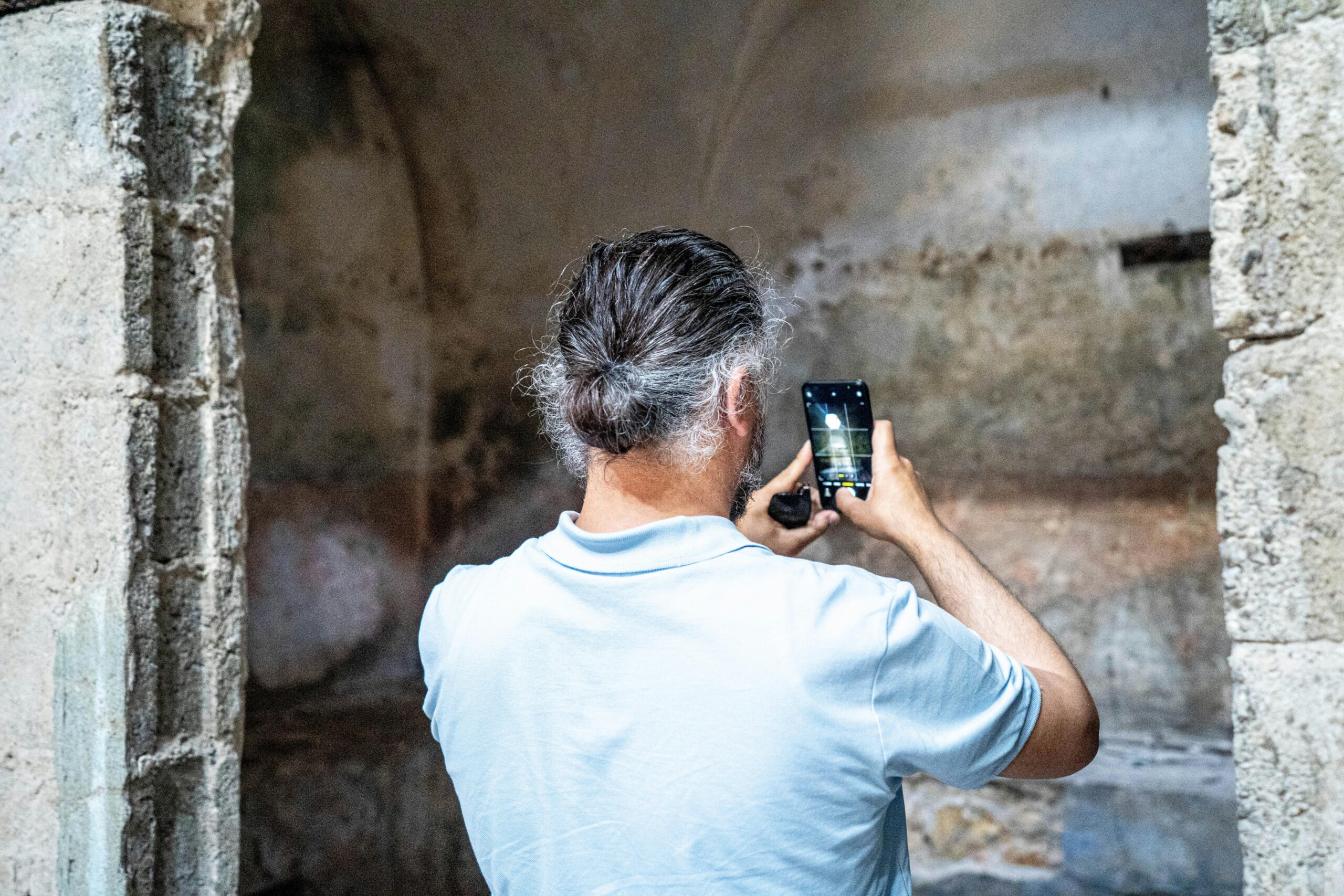
Portable scanning devices are becoming increasingly accessible, enabling field archaeologists to document discoveries immediately during excavation. Smartphone-based photogrammetry applications democratize 3D capture, allowing citizen scientists and local communities to participate in heritage documentation.
Climate Change and Urgent Documentation Priorities
Rising sea levels, intensifying storms, and changing precipitation patterns threaten countless archaeological sites. Coastal ruins face erosion and inundation, while desert sites experience unprecedented rainfall and flooding. This environmental urgency has accelerated documentation efforts, with projects racing to create digital records before physical sites disappear.
Prioritization becomes critical when resources cannot meet documentation needs. Which sites merit immediate attention? How do we balance preserving famous monuments against documenting lesser-known sites that might offer greater research value? These triage decisions require difficult compromises between competing valid priorities.
💡 Collaborative Networks Strengthening Global Preservation
International cooperation has become essential for effective heritage preservation. Organizations like UNESCO, the World Monuments Fund, and regional archaeological institutions coordinate documentation efforts, share technical expertise, and mobilize resources for threatened sites. These networks prevent duplication, standardize methodologies, and ensure knowledge transfer between projects.
Academic partnerships connect researchers across continents, enabling comparative studies and methodological innovations. Universities in technology-rich countries often collaborate with institutions near heritage sites, combining local archaeological knowledge with advanced scanning capabilities. These partnerships ideally respect local expertise while providing technical resources that might otherwise be unavailable.
The Living Archive: Beyond Static Documentation
Modern digital archives are increasingly dynamic, incorporating ongoing research, multiple interpretations, and evolving understandings. Rather than presenting fixed reconstructions, advanced platforms offer layered models showing different archaeological phases, competing interpretations, and degrees of certainty for various elements.
These living archives acknowledge that archaeological knowledge remains provisional, subject to revision as new evidence emerges or analytical methods improve. Interactive timelines show how interpretations have evolved, making the research process itself transparent and accessible. This approach transforms passive consumption into active engagement, inviting users to understand how archaeologists construct knowledge from fragmentary evidence.
🎯 Practical Applications Extending Beyond Archaeology
Skills and technologies developed for archaeological preservation find applications across diverse fields. Urban planners use 3D documentation for historic district management. Disaster response teams create baseline models enabling damage assessment after natural catastrophes. Architecture students study ancient construction techniques through detailed digital analysis. Tourism industries develop virtual experiences supplementing physical visitation.
The forensic documentation skills archaeologists have perfected now inform crime scene investigation, accident reconstruction, and legal evidence presentation. Medical imaging borrows algorithms originally designed for processing archaeological scans. These cross-disciplinary connections demonstrate how investment in heritage preservation generates broader societal benefits beyond cultural conservation.
Preserving the Future of Our Past
As we advance deeper into the digital age, 3D preservation technology stands as humanity’s testament to valuing history amidst rapid change. Each documented site represents not just technical achievement but a commitment to remembering where we came from, understanding how we evolved, and preserving cultural diversity for generations yet to come.
The ancient ruins themselves may eventually succumb to time’s inevitable erosion, but their digital counterparts can potentially endure indefinitely. This digital immortality offers profound reassurance that even when stones crumble and monuments collapse, the knowledge they embodied, the artistry they displayed, and the stories they told will continue inspiring wonder, informing research, and connecting us to our shared human heritage.
The revolution in archaeological preservation reminds us that technology serves its highest purpose when applied to fundamentally human concerns—remembering our ancestors, learning from their achievements, understanding our place in the vast sweep of history, and ensuring that the remarkable diversity of human cultural expression survives for those who will follow us into an uncertain future.